Hantavirus Exposure Guide: Symptoms, Risks, Cleanup, and When to Act
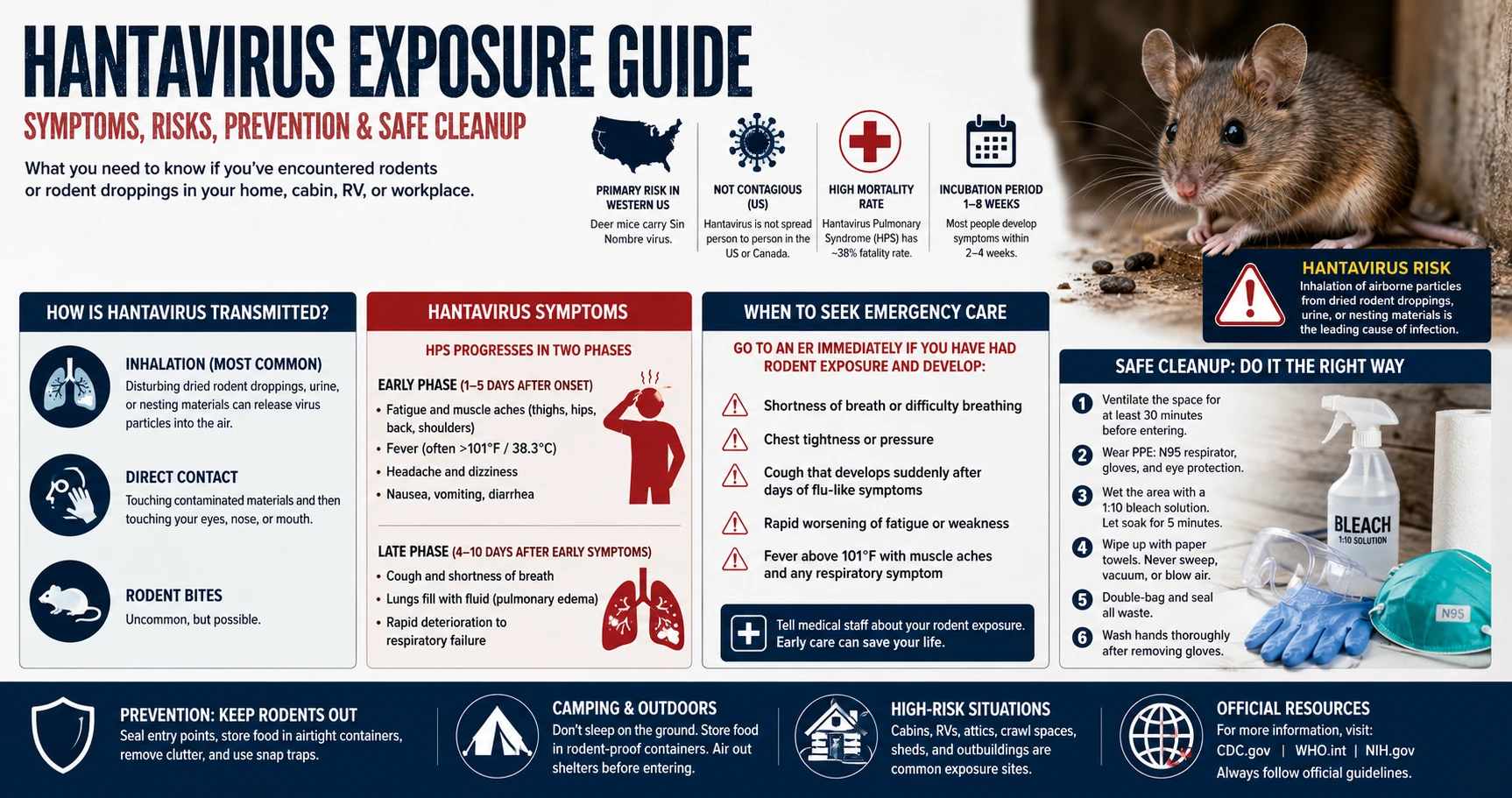
Hantavirus is a rare but potentially fatal illness transmitted by infected rodents. If you have recently found rodent droppings in your home, cabin, RV, or workplace — or if you have been cleaning a space where rodents have been active — understanding your risk is urgent.
A few things worth knowing upfront: hantavirus infection, even after genuine exposure, is not inevitable. The virus is real and serious, but most people who clean up droppings without proper precautions do not get sick. What matters is understanding which situations carry actual risk, what the warning signs look like, and what to do if you've already handled contaminated material the wrong way.
What Is Hantavirus?
Hantavirus refers to a family of viruses carried by specific rodent species worldwide. In North America, the primary concern is Hantavirus Pulmonary Syndrome (HPS), a severe respiratory illness caused by the Sin Nombre virus. HPS was first identified in 1993 following an outbreak in the Four Corners region of the southwestern United States.
The virus does not make its rodent hosts visibly sick, which means an infected deer mouse looks and behaves exactly like an uninfected one. There is no commercially available vaccine for hantavirus, and no specific antiviral treatment is approved for HPS. Treatment is supportive — doctors manage symptoms and complications while the body fights the infection.
The case fatality rate for HPS in the United States is approximately 38%.
How Is Hantavirus Transmitted?
Hantavirus spreads from infected rodents to humans through three primary routes:
- Inhalation — the most common route. When dried rodent droppings, urine, or nesting materials are disturbed, virus particles become airborne. Breathing this contaminated dust is the leading cause of infection.
- Direct contact — touching rodent droppings, urine, or nesting material and then touching your eyes, nose, or mouth.
- Rodent bites — uncommon but documented.
One critical point: hantavirus does not spread person to person in the United States. You cannot catch HPS from an infected person through coughing, sneezing, or casual contact. Every confirmed US case traces back to direct rodent exposure. The one exception is the Andes virus in South America, which has documented person-to-person transmission in rare cases.
Which Rodents Carry Hantavirus?
Not all rodents carry hantavirus. In North America, the deer mouse (Peromyscus maniculatus) is the primary reservoir for Sin Nombre virus and responsible for the vast majority of US hantavirus cases.
Other rodent species associated with hantavirus variants in the US include the white-footed mouse, rice rat, and cotton rat. See dangerous rodents in the US for a full species breakdown.
The common house mouse (Mus musculus) is not a known hantavirus reservoir in the US. However, visually distinguishing a deer mouse from a house mouse requires attention — see deer mouse vs house mouse for the key differences.
High-Risk Situations
Hantavirus exposure most commonly occurs in enclosed, previously unventilated spaces where rodents have been nesting undisturbed:
- Opening a cabin after winter — rodents often move into closed structures during cold months. See cleaning a cabin after winter safely.
- RVs and campers stored off-season — the enclosed environment of a stored RV is ideal rodent habitat. Read the RV mouse contamination guide before opening a stored vehicle.
- Attics, crawl spaces, and basements — low-traffic areas with insulation used for nesting. See attic mouse droppings cleanup guide.
- Barns, sheds, and outbuildings — rural structures where deer mice are common.
- Camping — sleeping on the ground or in poorly sealed tents near rodent habitat.
The common thread: disturbing dried rodent waste in an enclosed space with limited ventilation. A few droppings in a ventilated kitchen presents a very different risk profile than spending 45 minutes shifting insulation in a sealed attic. Location, duration, and air exchange matter more than the number of droppings alone.
Hantavirus Symptoms
HPS progresses in two distinct phases:
Early phase (1–5 days after symptom onset):
- Fatigue and deep muscle aches, especially thighs, hips, back, and shoulders
- Fever, often above 101°F (38.3°C)
- Headache and dizziness
- Gastrointestinal symptoms: nausea, vomiting, diarrhea (in about half of cases)
Late phase (4–10 days after early symptoms):
- Cough and shortness of breath
- Lungs filling with fluid (pulmonary edema)
- Rapid deterioration to respiratory failure
For a detailed day-by-day breakdown, see the hantavirus symptoms timeline. To assess specific symptoms after exposure, see signs of hantavirus exposure.
When to Seek Emergency Care
Go to an emergency room immediately if you have had potential rodent exposure and develop any of the following:
- Shortness of breath or difficulty breathing
- Chest tightness or pressure
- Cough that develops suddenly after days of flu-like symptoms
- Rapid worsening of fatigue or weakness
- Fever above 101°F combined with muscle aches and any respiratory symptom
Do not wait to see if symptoms improve. HPS can progress from early flu-like symptoms to respiratory failure within hours. Tell emergency staff immediately that you have had recent rodent exposure — this information is critical for diagnosis.
For more detail: when to see a doctor after rodent exposure and what happens if you inhale mouse droppings.
Safe Cleanup Practices
Improper cleanup is one of the most common ways people inadvertently expose themselves to hantavirus — and it usually happens because someone found droppings and tried to deal with them quickly before fully understanding the risk. Vacuuming, sweeping, or blowing air across dried droppings launches viral particles into the air you breathe.
The correct approach:
- Ventilate the space for at least 30 minutes before entering — open windows and doors and leave.
- Wear proper PPE — at minimum an N95 respirator, nitrile gloves, and eye protection.
- Wet the contaminated area with a 1:9 bleach-to-water solution or EPA-registered disinfectant. Let soak for at least 5 minutes.
- Wipe up using paper towels — never dry sweep or vacuum.
- Double-bag and seal all waste before disposal.
- Wash hands thoroughly after removing gloves.
If you've already vacuumed or swept before finding this page: ventilate the space immediately, then go back in with proper PPE and do the wet disinfection from the beginning. The earlier pass likely aerosolized material rather than removing it.
Detailed instructions: how to clean mouse droppings safely | what PPE to wear when cleaning mouse droppings | can you vacuum mouse droppings?
Prevention
Rodent-proofing your home or structure:
- Seal all gaps larger than a dime in foundations, walls, and around utility lines with steel wool, hardware cloth, or caulk.
- Store food — including pet food — in airtight hard-sided containers.
- Remove clutter, woodpiles, and debris from around structures.
- Set snap traps (not glue traps) in areas with rodent activity.
Camping and outdoor precautions:
- Do not sleep directly on the ground.
- Store food in rodent-proof containers, never in your sleeping area.
- Avoid shelters with visible rodent activity or droppings.
- Air out any structure before entering after a period of closure.
See hantavirus camping risk explained for outdoor-specific guidance.
Hantavirus by Location in the US
The western half of the country — particularly the Four Corners region, California, Washington, Oregon, and Montana — accounts for the majority of reported cases, reflecting the deer mouse range.
Key resources:
- Hantavirus in California — including the 2012 Yosemite outbreak
- National park hantavirus warnings explained
- Hantavirus outbreak timeline
Official Resources
- CDC Hantavirus — exposure risk and clinical guidance
- CDC: Cleaning Up After Rodents — cleanup protocol
- WHO Hantavirus Fact Sheet — global disease reference
If you believe you have been exposed to hantavirus or are experiencing symptoms consistent with HPS, contact your healthcare provider or go to an emergency room and describe your potential rodent exposure.
Sources & References
- CDC — Centers for Disease Control and Prevention
Hantavirus: Prevention, Symptoms & Control
- WHO — World Health Organization
Hantavirus Disease: Fact Sheet
- NIH — National Institutes of Health
PubMed: Hantavirus Research
All health claims on this page are verified against the primary sources listed above. View our Editorial Policy
Frequently Asked Questions
Medical Disclaimer
The information on this page is for educational purposes only and is not medical advice. If you believe you may have been exposed to hantavirus or are experiencing symptoms, contact a qualified healthcare professional or local health authority immediately.