When to See a Doctor After Rodent Exposure: A Decision Guide
Most people who encounter rodent droppings — even without proper protection — do not develop hantavirus. But because the disease progresses quickly once symptoms start, knowing when to act matters.
The question "should I see a doctor?" is one of the most common ones that follows a rodent cleanup, especially when someone learns after the fact that they didn't use the right protection. The decision depends heavily on the exposure circumstances — not just on the presence of droppings.
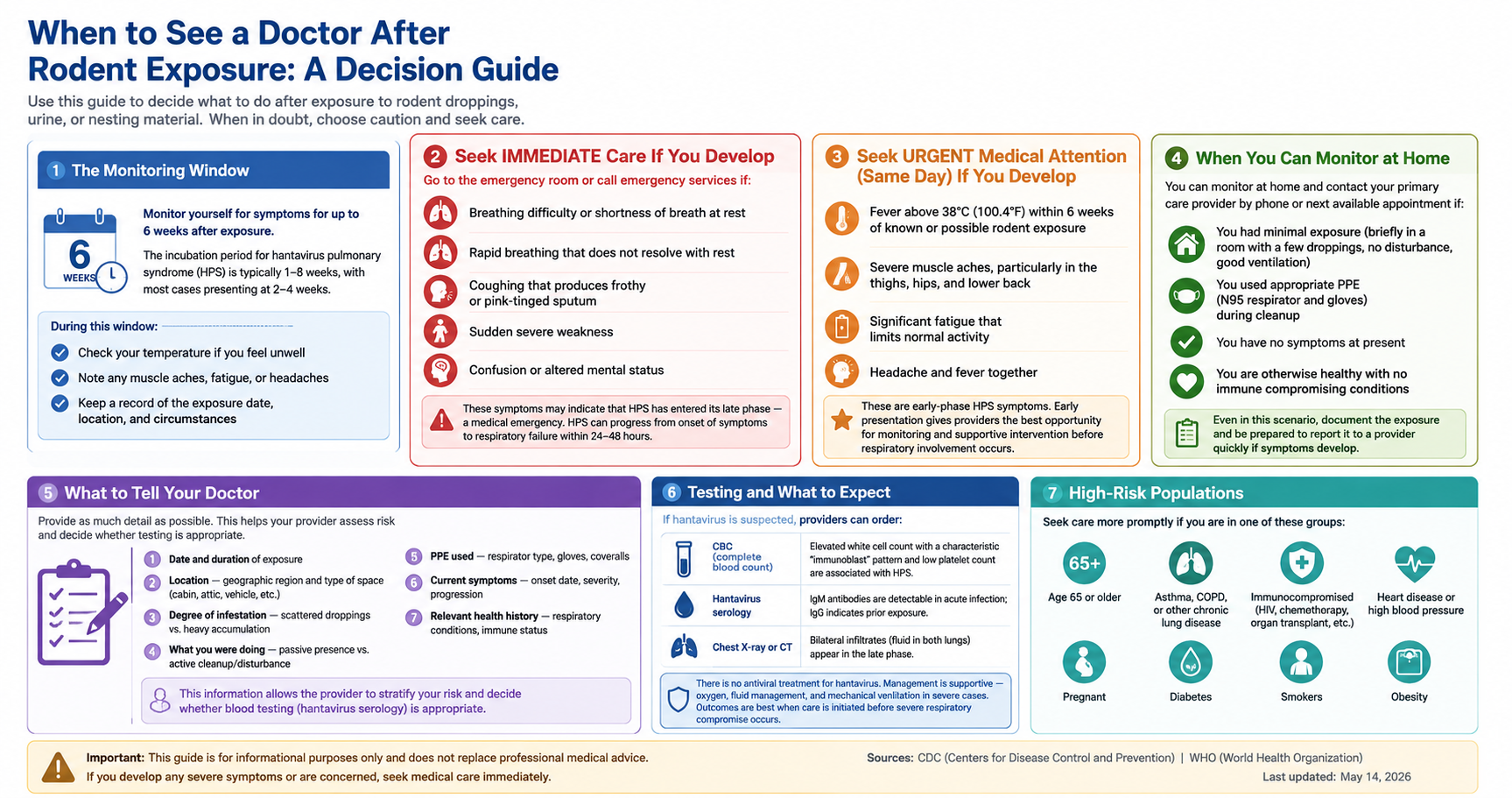
The Monitoring Window
After a potential exposure to rodent droppings, urine, or nesting material, monitor yourself for symptoms for up to 6 weeks. The incubation period for hantavirus pulmonary syndrome (HPS) is typically 1–8 weeks, with most cases presenting at 2–4 weeks.
During this window:
- Check your temperature if you feel unwell
- Note any muscle aches, fatigue, or headaches
- Keep a record of the exposure date, location, and circumstances
Seek Immediate Care If You Develop
Go to the emergency room or call emergency services if:
- Breathing difficulty or shortness of breath at rest
- Rapid breathing that does not resolve with rest
- Coughing that produces frothy or pink-tinged sputum
- Sudden severe weakness
- Confusion or altered mental status
These symptoms may indicate that HPS has entered its late phase — a medical emergency. HPS can progress from onset of symptoms to respiratory failure within 24–48 hours.
Seek Urgent Medical Attention (Same Day) If You Develop
- Fever above 38°C (100.4°F) within 6 weeks of known or possible rodent exposure
- Severe muscle aches, particularly in the thighs, hips, and lower back
- Significant fatigue that limits normal activity
- Headache and fever together
These are early-phase HPS symptoms. Getting care at this stage — before breathing problems develop — gives doctors the best chance to monitor and respond before the disease worsens.
When You Can Monitor at Home
You can monitor at home and contact your primary care provider by phone or next available appointment if:
- You had minimal exposure — briefly in a ventilated room with a few droppings, no sweeping or vacuuming, no nesting material disturbed (think: noticed droppings under a sink and stepped back)
- You used appropriate PPE (N95 respirator and gloves) during cleanup
- You have no symptoms at present
- You are otherwise healthy with no immune compromising conditions
Even in this situation, note the date and circumstances of the exposure and be ready to describe it to a provider if symptoms develop over the next few weeks.
What to Tell Your Doctor
When you seek care for potential hantavirus exposure, give your provider:
- Date and duration of exposure
- Location — geographic region and type of space (cabin, attic, vehicle, etc.)
- Degree of infestation — scattered droppings vs. heavy accumulation
- What you were doing — passive presence vs. active cleanup/disturbance
- PPE used — respirator type, gloves, coveralls
- Current symptoms — onset date, severity, progression
- Relevant health history — respiratory conditions, immune status
This context helps the doctor understand how serious the exposure may have been — and whether blood testing for hantavirus is worth doing.
Testing and What to Expect
If hantavirus is suspected, providers can order:
- Blood count (CBC): Certain patterns — elevated white cells, low platelets — are associated with HPS and can support the diagnosis
- Hantavirus antibody test: Detects the body's immune response to the virus; most useful once symptoms are present
- Chest X-ray or CT: Fluid accumulation in both lungs appears in the late phase and is a key diagnostic finding
There is no antiviral treatment for hantavirus. Doctors manage symptoms — oxygen support, fluids, mechanical ventilation in severe cases. The earlier care starts, the better the outcome.
High-Risk Populations
Seek care more promptly if you are in one of these groups:
- Age 65 or older
- History of asthma, COPD, or other chronic lung disease
- Immunocompromised (HIV, chemotherapy, organ transplant recipient)
- Pregnancy
If you're in one of these groups, don't wait to see if early symptoms resolve on their own — get evaluated sooner rather than later.
Official Sources
- CDC Hantavirus — clinical guidance and when to seek care
- WHO Hantavirus Fact Sheet — disease progression reference
Sources & References
- CDC — Centers for Disease Control and Prevention
Hantavirus: Prevention, Symptoms & Control
- WHO — World Health Organization
Hantavirus Disease: Fact Sheet
All health claims on this page are verified against the primary sources listed above. View our Editorial Policy
Frequently Asked Questions
Medical Disclaimer
The information on this page is for educational purposes only and is not medical advice. If you believe you may have been exposed to hantavirus or are experiencing symptoms, contact a qualified healthcare professional or local health authority immediately.