Hantavirus Symptoms Timeline: Incubation, Early Phase, and Late Phase
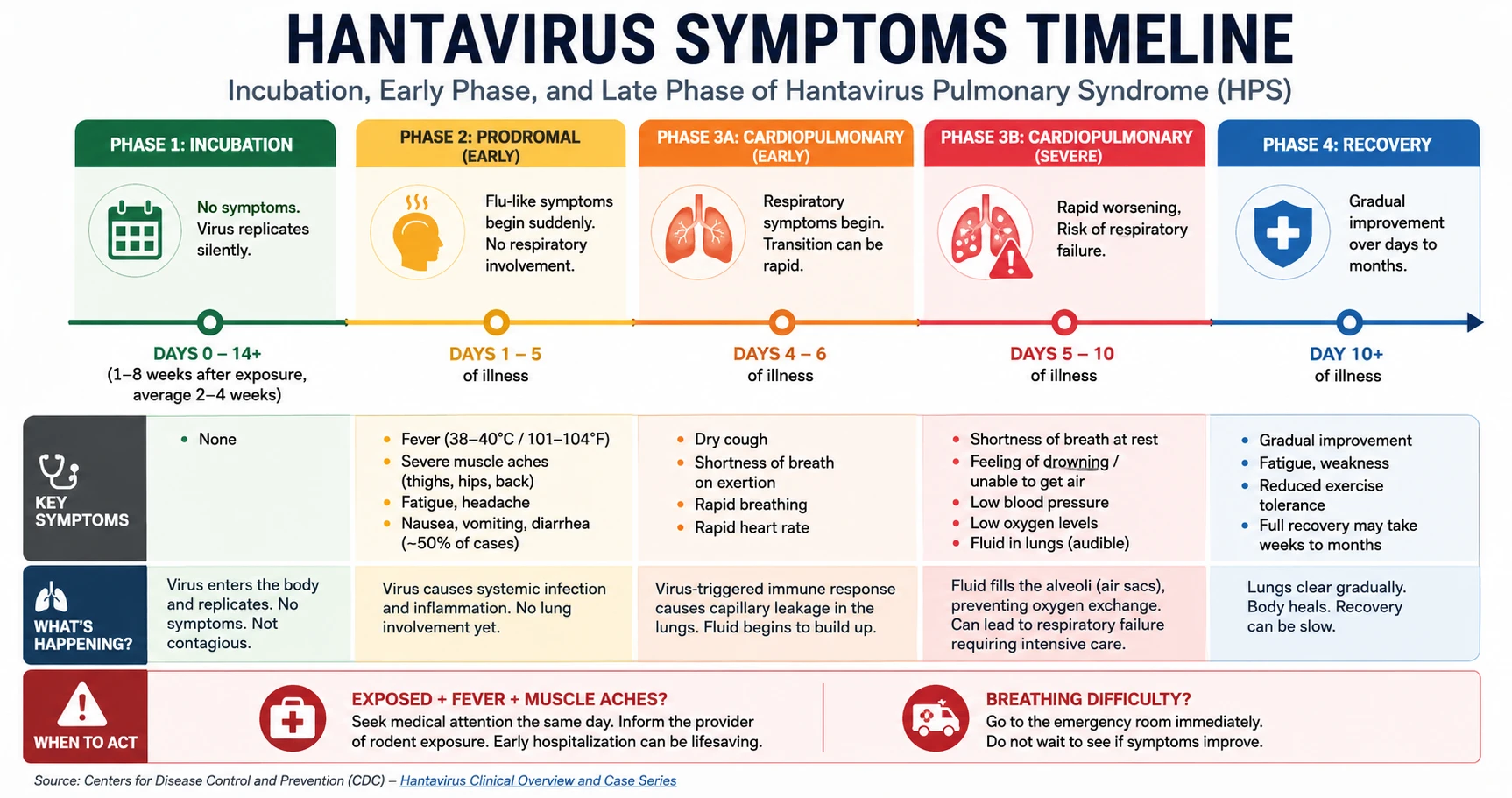
Overview of HPS Progression
Hantavirus pulmonary syndrome (HPS) progresses through three distinct phases:
- Incubation — no symptoms, virus replicating
- Prodromal (early) phase — flu-like symptoms, no respiratory involvement
- Cardiopulmonary (late) phase — fluid in lungs, potential respiratory failure
Most people exposed to rodent material do not develop HPS. But for those who do, the timeline matters: the window for intervention exists mainly in the early phase, before respiratory symptoms begin. Once the lungs start filling with fluid, the condition requires intensive care.
Phase 1: Incubation (Days 0 to ~14)
Duration: 1 to 8 weeks (average 2–4 weeks)
After inhaling hantavirus, there is a silent period during which the virus replicates but causes no detectable symptoms. The infected person feels normal.
Key points:
- No symptoms, no warning signs
- Testing during this phase is not reliable
- Person is not contagious to others
- The incubation period cannot be shortened or altered
If you've passed 8 weeks since a potential exposure with no symptoms, your likelihood of developing HPS from that event is very low.
Phase 2: Prodromal Phase (Days 1–5 of illness)
Duration: 3–5 days
The first symptoms appear abruptly. This phase is often described as a severe flu.
Symptoms:
- Fever — typically 38–40°C (101–104°F), often with chills
- Deep muscle aches — severe pain in the thighs, hips, and lower back; often more intense than typical flu
- Fatigue — profound exhaustion disproportionate to apparent illness
- Headache — often severe
- Gastrointestinal (present in approximately half of cases) — nausea, vomiting, abdominal pain, diarrhea
Absent during this phase:
- Cough
- Breathing difficulty
- Runny nose or sore throat (common in influenza, uncommon in HPS)
Why this matters: The absence of respiratory symptoms is paradoxically dangerous. Patients may interpret early HPS as ordinary flu and wait for improvement. The window during which early identification allows hospitalization before crisis occurs is narrow.
Phase 3: Cardiopulmonary Phase (Days 4–10 of illness)
Duration: Usually begins days 4–6 after symptom onset; transition can be sudden
Symptoms — early:
- Dry cough
- Shortness of breath on exertion
- Rapid breathing
- Rapid heart rate
Symptoms — late:
- Shortness of breath at rest
- Feeling of drowning / inability to get air
- Low blood pressure
- Oxygen saturation drop
- Fluid audible in lungs
What is happening: The virus triggers an immune response that causes fluid to leak into the lungs faster than the body can clear it. The lungs begin filling — not because the heart is failing, but because the lung tissue itself is breaking down. Breathing becomes progressively harder as oxygen exchange is blocked.
In severe cases, patients require a ventilator. Some need life support to keep oxygen in the blood while the lungs recover.
Recovery Phase
Patients who survive the cardiopulmonary phase typically begin recovering within 2–3 days of the nadir. Recovery from severe HPS can take weeks to months, with persistent fatigue, reduced exercise tolerance, and lung function abnormalities in some survivors.
Timeline Summary
| Phase | Timing | Key Symptoms |
|---|---|---|
| Incubation | Days 0–14+ (from exposure) | None |
| Prodromal | Days 1–5 of illness | Fever, myalgia, fatigue |
| Cardiopulmonary (early) | Days 4–6 | Cough, shortness of breath on exertion |
| Cardiopulmonary (severe) | Days 5–10 | Shortness of breath at rest, respiratory failure |
| Recovery | Days 10+ | Gradual improvement |
When to Act
If you were exposed to rodent droppings and develop fever + muscle aches:Seek medical attention on the same day. Inform the provider of the exposure. Early hospitalization for observation allows monitoring during the transition from prodromal to cardiopulmonary phase.
If you develop breathing difficulty: Go to the emergency room immediately. Do not wait to see if symptoms improve.
Official Sources
- CDC Hantavirus — clinical guidance and symptom progression
- WHO Hantavirus Fact Sheet — disease progression reference
Sources & References
- CDC — Centers for Disease Control and Prevention
Hantavirus: Prevention, Symptoms & Control
- WHO — World Health Organization
Hantavirus Disease: Fact Sheet
All health claims on this page are verified against the primary sources listed above. View our Editorial Policy
Frequently Asked Questions
Medical Disclaimer
The information on this page is for educational purposes only and is not medical advice. If you believe you may have been exposed to hantavirus or are experiencing symptoms, contact a qualified healthcare professional or local health authority immediately.