Signs of Hantavirus Exposure: Symptoms, Risk Factors, and When to Act
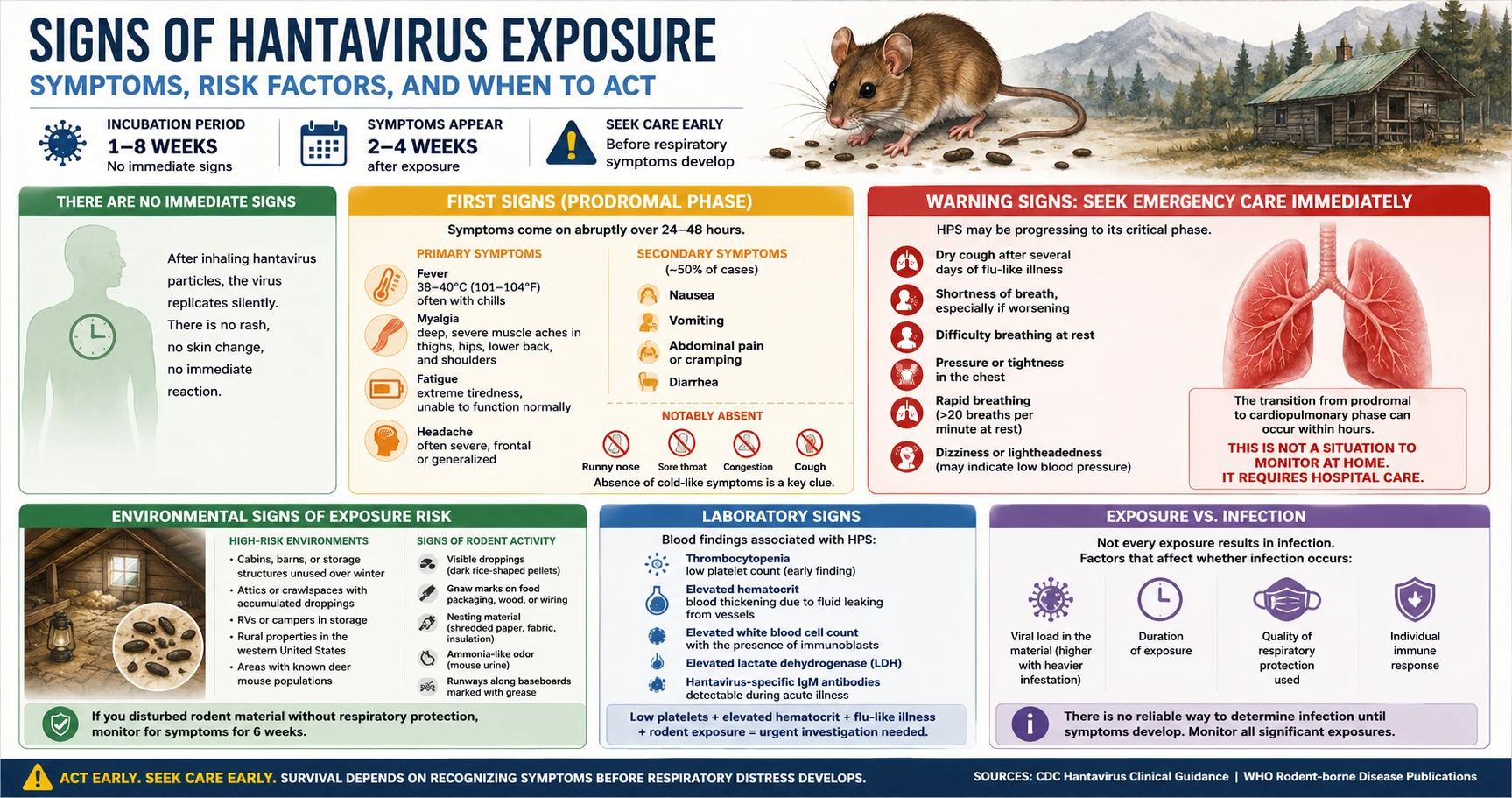
If You're Worried About Recent Exposure
People often arrive at this article after cleaning out a cabin or garage, disturbing what turned out to be rodent nesting material, or spending time in a space with visible mouse evidence — and now wondering if they were exposed and what to watch for.
Most people who disturb rodent material in a garage, attic, or cabin do not develop hantavirus — but the virus is serious enough that knowing what to watch for matters. Hantavirus exposure produces no immediate signs, and the window between exposure and symptoms can span weeks. This page covers what to monitor, when to act, and how to tell whether your situation is likely low-risk or warrants medical attention.
There Are No Immediate Signs
After inhaling hantavirus particles, nothing happens immediately. The virus begins replicating silently for 1 to 8 weeks — the incubation period. There is no rash, no skin change, no immediate reaction.
This is one of the most dangerous aspects of hantavirus: by the time you feel sick, significant viral replication has already occurred.
First Signs (Prodromal Phase)
Symptoms typically appear 2–4 weeks after exposure and come on relatively abruptly over 24–48 hours:
Primary symptoms:
- Fever — usually 38–40°C (101–104°F), often with chills
- Deep muscle aches — severe pain in the thighs, hips, lower back, and shoulders; often more intense than typical flu
- Fatigue — extreme tiredness, often described as being unable to function normally
- Headache — often severe, frontal or generalized
Secondary symptoms (present in approximately 50% of cases):
- Nausea
- Vomiting
- Abdominal pain or cramping
- Diarrhea
Notably absent:
- Runny nose
- Sore throat
- Congestion
- Cough (in the early phase)
The absence of upper respiratory symptoms is a key distinguishing feature from influenza. If your "flu" has no cold-like symptoms but extreme muscle aches, and you have had recent rodent exposure, the index of suspicion for HPS should be elevated.
Warning Signs Requiring Emergency Care
The following symptoms indicate that HPS may be progressing to its critical phase. Seek emergency care immediately:
- Dry cough appearing after several days of flu-like illness
- Shortness of breath — especially if worsening
- Difficulty breathing at rest
- Sensation of pressure or tightness in the chest
- Rapid breathing (more than 20 breaths per minute at rest)
- Dizziness or lightheadedness (may indicate low blood pressure)
The transition from prodromal to cardiopulmonary phase can occur within hours. This is not a situation to monitor at home — it requires hospital observation.
Environmental Signs of Exposure Risk
Before symptoms develop, you can assess whether you may have been exposed:
High-risk environments:
- Cabins, barns, or storage structures unused over winter
- Attics or crawlspaces with accumulated droppings
- RVs or campers that have been in storage
- Rural properties in the western United States
- Areas with known deer mouse populations
Signs of rodent activity:
- Visible droppings (dark rice-shaped pellets)
- Gnaw marks on food packaging, wood, or wiring
- Nesting material (shredded paper, fabric, insulation)
- Ammonia-like odor (mouse urine)
- Runways along baseboards marked with grease
If you have been in a high-risk environment and disturbed rodent material — especially without respiratory protection — you should monitor for symptoms for 6 weeks.
What Doctors Look For
If you go to a provider with flu-like symptoms and a history of rodent exposure, they'll typically run blood tests. Certain patterns in those results — low platelets, elevated white blood cell count, specific antibodies — are strongly associated with HPS and can support the diagnosis before symptoms worsen.
Mention the exposure upfront, even if you're not sure it's relevant. A provider who knows about potential rodent exposure will order different tests than one who assumes it's ordinary flu. Early lab findings can appear before respiratory symptoms do, which is exactly when treatment has the most impact.
For the specific antibody test: hantavirus IgM antibodies become detectable during active infection. There's no useful pre-exposure screening test for people who feel well.
Difference Between Exposure and Infection
Not every exposure results in infection. Factors that affect whether infection occurs include:
- Viral load in the material (higher with heavier infestation)
- Duration of exposure
- Quality of respiratory protection used
- Individual immune response
However, because there is no reliable way to determine whether infection has occurred until symptoms develop, all significant exposures should be monitored.
Official Sources
- CDC Hantavirus — clinical symptom criteria and exposure guidance
- WHO Hantavirus Fact Sheet — disease presentation reference
Sources & References
- CDC — Centers for Disease Control and Prevention
Hantavirus: Prevention, Symptoms & Control
- WHO — World Health Organization
Hantavirus Disease: Fact Sheet
All health claims on this page are verified against the primary sources listed above. View our Editorial Policy
Frequently Asked Questions
Medical Disclaimer
The information on this page is for educational purposes only and is not medical advice. If you believe you may have been exposed to hantavirus or are experiencing symptoms, contact a qualified healthcare professional or local health authority immediately.