Hantavirus Camping Risk: What Actually Makes a Campsite Dangerous
The Actual Risk Landscape
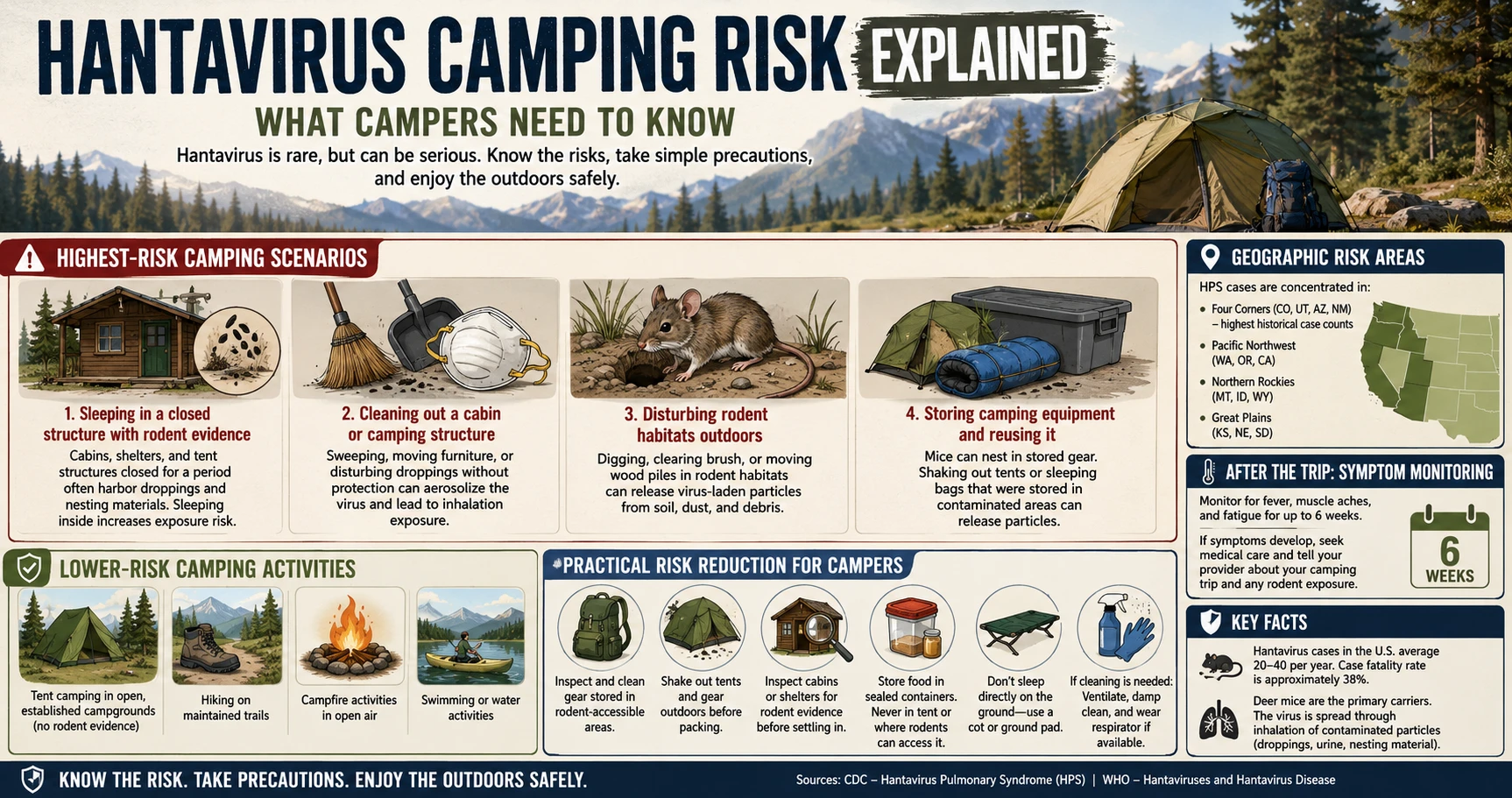
Hantavirus cases in the United States average approximately 20–40 per year, with most concentrated in the mountain west and plains states. The case fatality rate is approximately 38%.
While the absolute number of cases is low, the severity of HPS means that individual risk, when exposure occurs, is very high. The goal is not to avoid camping but to understand which specific scenarios create meaningful inhalation risk.
Most campers assume the danger is out in the woods somewhere. In practice, the biggest risk is what you sleep inside — specifically, enclosed structures that sat closed for months and were never inspected before arrival.
Highest-Risk Camping Scenarios
Sleeping in a closed structure with rodent evidence: This is the scenario most associated with documented HPS cases in campers. Cabins, ranger stations, trail shelters, and canvas tent structures that have been closed for a period often accumulate droppings and nesting material. See cleaning a cabin after winter safely for the full protocol if you encounter this. Sleeping in such a structure is prolonged exposure in an enclosed space.
Cleaning out a cabin or camping structure: Sweeping out a shelter, moving furniture, and disturbing accumulated droppings — without PPE — is exactly how particles get sent into the air and breathed in.
Disturbing rodent habitats outdoors: Digging in areas with rodent burrows, moving wood piles or brush in deer mouse habitat, and similar ground disturbance can release particles from contaminated soil and debris.
Storing camping equipment and reusing it: Most people think about cabins when they think about hantavirus risk. Gear storage is less obvious but probably more common as an exposure point. Tents, sleeping bags, and duffels left in garages, basements, or outbuildings can accumulate contamination if mice nest in or around them during the off-season. Shaking one out in an enclosed space before a trip is a realistic exposure scenario that most people never consider.
Lower-Risk Camping Activities
- Tent camping in an open, established campground with no evidence of rodents
- Hiking on maintained trails
- Campfire activities in open air
- Swimming or water activities
The common thread in lower-risk activities is open air and lack of close contact with rodent droppings or nesting sites.
Practical Risk Reduction for Campers
Before the trip:
- Inspect and clean camping equipment stored in potentially rodent-accessible areas
- Shake out tents, sleeping bags, and tarps outdoors before packing
- If gear was stored somewhere that may have had rodents, wash or air it thoroughly
At the campground:
- Choose tent camping over enclosed rental structures when possible in high-risk areas
- If using a rental cabin or shelter, inspect for rodent evidence before settling in
- If you find evidence of rodents (droppings, nesting, gnaw marks), request a different accommodation or postpone the stay
- Store food in sealed containers — never in your tent or where rodents can access it
- Do not sleep directly on the ground — use a cot or ground pad
If you encounter droppings in a camping structure:
Most people's first instinct is to sweep things out quickly and get on with the trip. That's the move that creates the most risk — dry sweeping sends particles into the air exactly where you're standing.
- Do not sweep or disturb them dry
- Ventilate the space for 30 minutes
- If you must clean, use a damp cloth or spray with disinfectant before wiping — and wear a respirator if available
Geographic Risk Areas
HPS cases are concentrated in:
- Four Corners region (Colorado, Utah, Arizona, New Mexico) — highest historical case counts
- Pacific Northwest (Washington, Oregon, California)
- Northern Rockies (Montana, Idaho, Wyoming)
- Great Plains (Kansas, Nebraska, South Dakota)
Deer mice are found throughout North America, but disease prevalence is highest in these regions.
After the Trip: Symptom Monitoring
If you camped in a high-risk area and had potential rodent exposure:
- Monitor for fever, muscle aches, and fatigue for up to 6 weeks
- If symptoms develop, seek medical care and tell the provider about your camping trip and any rodent exposure
Official Sources
- CDC Hantavirus — camping and outdoor exposure risk data
- CDC MMWR — camping-related HPS outbreak reports
Sources & References
- CDC — Centers for Disease Control and Prevention
Hantavirus: Prevention, Symptoms & Control
- WHO — World Health Organization
Hantavirus Disease: Fact Sheet
All health claims on this page are verified against the primary sources listed above. View our Editorial Policy
Frequently Asked Questions
Medical Disclaimer
The information on this page is for educational purposes only and is not medical advice. If you believe you may have been exposed to hantavirus or are experiencing symptoms, contact a qualified healthcare professional or local health authority immediately.