Why National Parks Post Hantavirus Warnings — and What You Should Actually Do
You've probably seen them — signs at trailheads or campsite bathrooms warning about hantavirus. They're easy to ignore. Most people do.
But they're also posted for a reason. National parks in the western US have documented hantavirus cases for decades, most tied to sleeping in enclosed structures with active deer mouse populations. The 2012 Yosemite outbreak killed three people who stayed in canvas tent cabins — they were breathing normally during the night, and that was enough.
Here's what those warning signs actually mean, what triggers them, which parks have seen cases, and what you should actually do differently.
What Triggers a National Park Hantavirus Warning
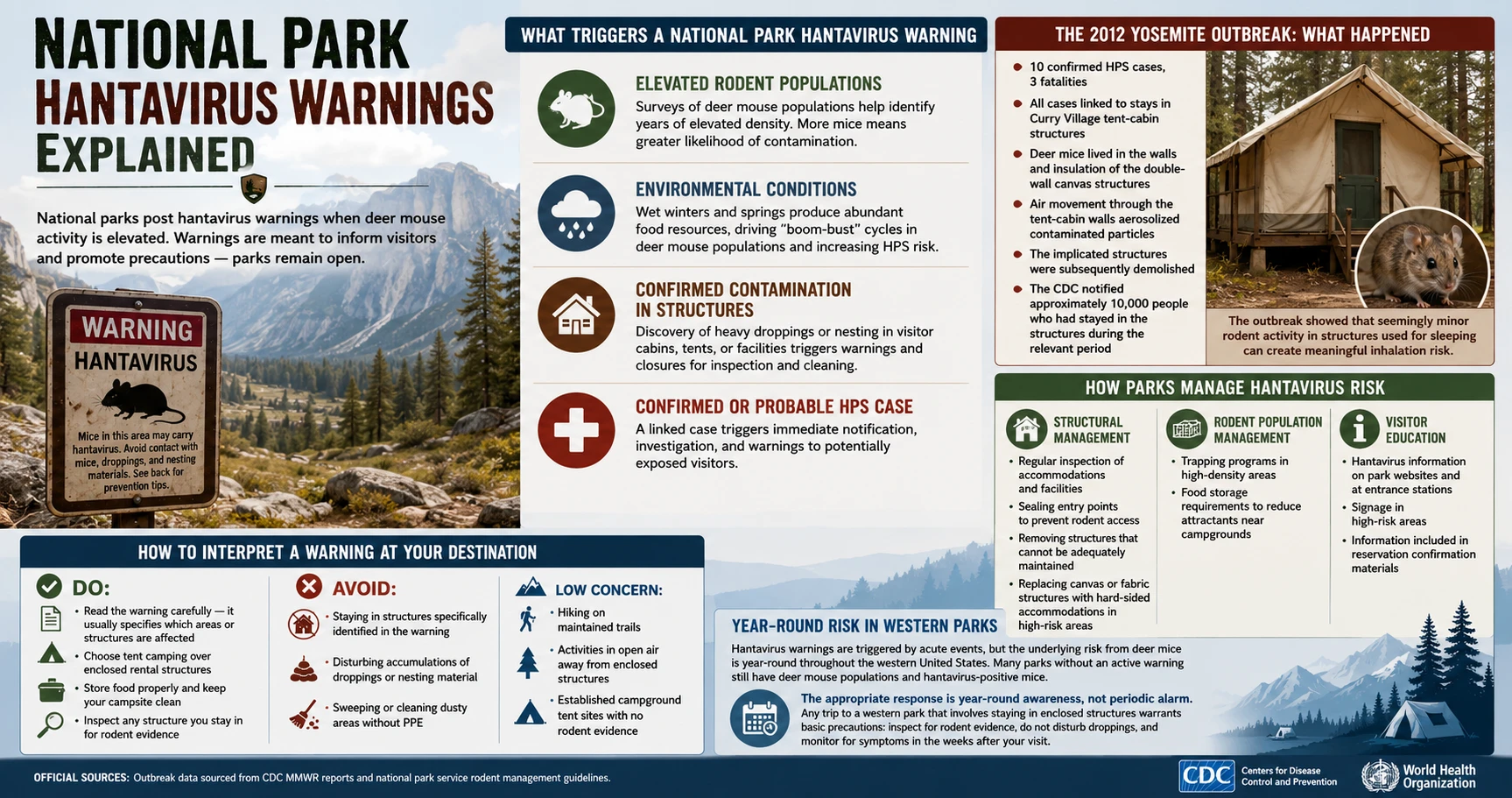
Parks issue hantavirus warnings in response to several different triggers:
Elevated rodent populations: Periodic surveys of deer mouse populations at parks help identify years of elevated density. Higher mouse populations mean greater likelihood of contamination in visitor areas.
Environmental conditions: Wet winters and springs produce abundant seed and food resources, driving periodic deer mouse population booms ("boom-bust" cycles). These boom years correlate with increased HPS risk in endemic areas.
Confirmed contamination in structures: When park maintenance discovers heavy droppings or nesting material in visitor cabins, tent structures, or other facilities, warnings are issued and the affected structures are closed for inspection and cleaning.
Confirmed or probable HPS case: A linked case triggers immediate notification, investigation, and warnings to potentially exposed visitors.
The 2012 Yosemite Outbreak: What Happened
The 2012 Yosemite outbreak is the most significant camping-associated HPS cluster in US history:
- 10 confirmed HPS cases, 3 fatalities
- All cases linked to stays in Curry Village tent-cabin structures
- Deer mice had been living in the walls and insulation of the double-wall canvas structures
- Air movement through the tent-cabin walls carried contaminated particles into the sleeping areas
- The implicated structures were subsequently demolished
- The CDC notified approximately 10,000 people who had stayed in the structures during the relevant period
The tent cabins looked like any other accommodation. The beds were made. There was nothing visible to suggest a problem. Guests had no reason to think anything was wrong. Breathing normally during the night was enough.
How Parks Manage Hantavirus Risk
National parks use several strategies to reduce hantavirus risk in visitor areas:
Structural management:
- Regular inspection of visitor accommodations and facilities
- Sealing entry points in structures to prevent rodent access
- Removing structures that cannot be adequately maintained
- Replacing canvas or fabric structures with hard-sided accommodations in high-risk areas
Rodent population management:
- Trapping programs in high-density areas
- Food storage requirements to reduce attractants near campgrounds
Visitor education:
- Hantavirus information on park websites and at entrance stations
- Signage in high-risk areas
- Information included in reservation confirmation materials
How to Interpret a Warning at Your Destination
If a park you are visiting has a current hantavirus warning:
Do:
- Read the warning carefully — it usually specifies which areas or structures are affected, not the whole park. Most people miss this part.
- Choose tent camping over enclosed rental structures
- Store food properly and keep your campsite clean
- Inspect any structure you stay in for rodent evidence before unloading your gear
Avoid:
- Staying in structures specifically identified in the warning
- Disturbing accumulations of droppings or nesting material
- Sweeping or cleaning dusty areas without PPE
Low concern:
- Hiking on maintained trails
- Activities in open air away from enclosed structures
- Established campground tent sites with no rodent evidence
Year-Round Risk in Western Parks
Hantavirus warnings are triggered by acute events, but the underlying risk from deer mice is year-round throughout the western United States. Many parks that do not have an active warning still have deer mouse populations and hantavirus-positive mice.
Warnings come and go. The mice don't. Any trip to a western park that involves staying in enclosed structures warrants the same basic precautions whether or not there's an active warning posted: inspect for rodent evidence before settling in, don't disturb droppings, and monitor for symptoms in the weeks after your visit.
Official Sources
- CDC Hantavirus — outbreak data and national park risk
- CDC MMWR — park-related HPS outbreak investigation records
- National Park Service — rodent management and visitor guidance
Sources & References
- CDC — Centers for Disease Control and Prevention
Hantavirus: Prevention, Symptoms & Control
- WHO — World Health Organization
Hantavirus Disease: Fact Sheet
All health claims on this page are verified against the primary sources listed above. View our Editorial Policy
Frequently Asked Questions
Medical Disclaimer
The information on this page is for educational purposes only and is not medical advice. If you believe you may have been exposed to hantavirus or are experiencing symptoms, contact a qualified healthcare professional or local health authority immediately.