Hantavirus in Colorado: Risk by Region and What to Know
Colorado's Hantavirus Risk
Colorado consistently ranks among the top three states for total Hantavirus Pulmonary Syndrome cases, alongside New Mexico and Arizona. The state's combination of extensive mountain and foothill terrain, high rural land use, and abundant deer mouse habitat makes it one of the more significant HPS risk areas in the country.
The 1993 Four Corners outbreak that first put HPS on the public health map was centered partly in Colorado's southwest corner. Surveillance established in that era has since documented cases in most of the state's counties over the decades that followed.
Where the Risk Is Concentrated
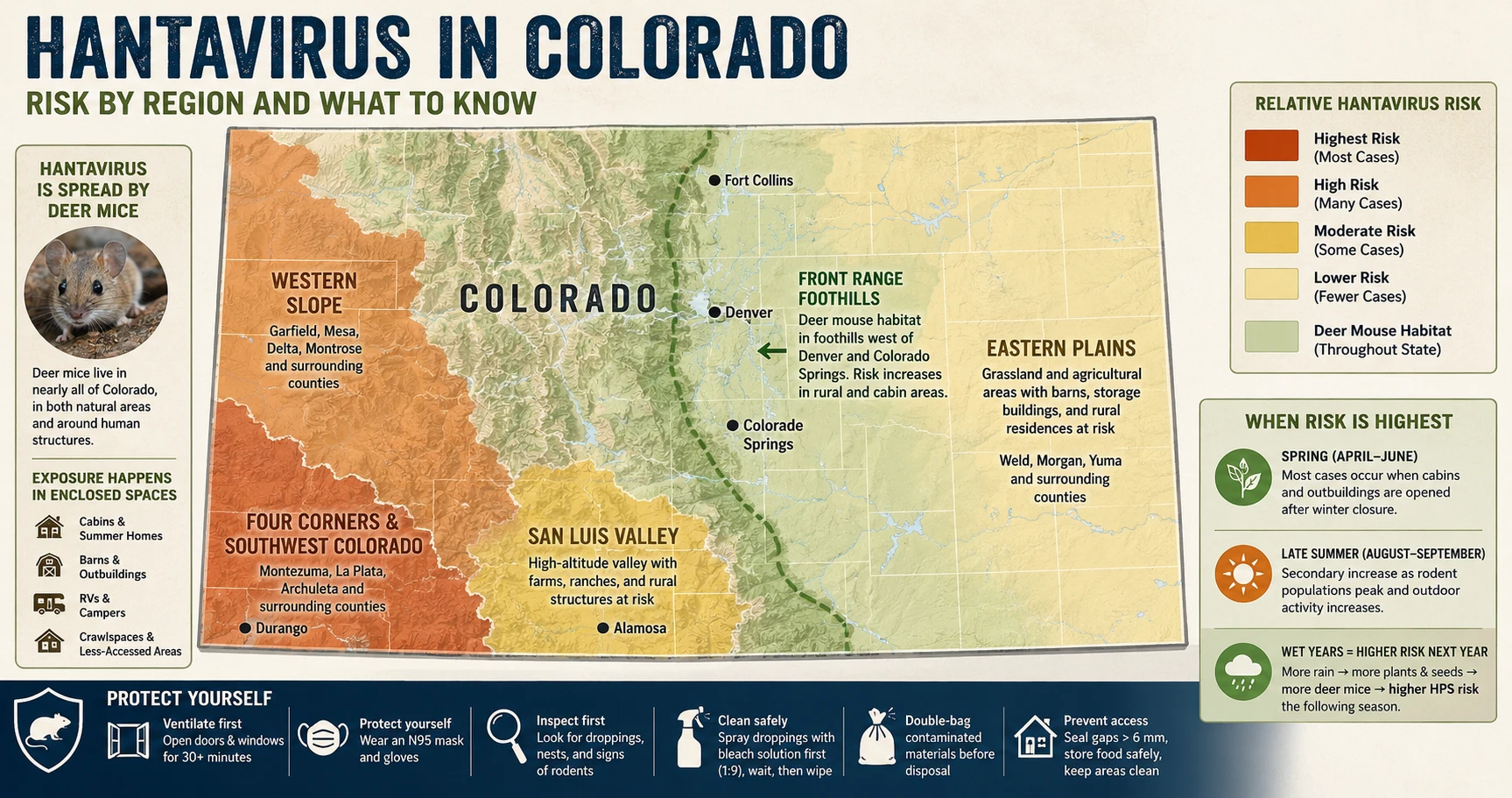
Hantavirus cases in Colorado do not follow a single geographic pattern — they have occurred in most regions of the state — but certain areas show higher concentrations:
Four Corners and southwest Colorado: The counties in Colorado's southwest corner (Montezuma, La Plata, Archuleta, and neighboring areas) were part of the original 1993 outbreak territory. High deer mouse density in mesa and canyon environments, combined with extensive rural structures, creates persistent risk.
San Luis Valley: The broad, high-altitude valley in south-central Colorado has documented HPS cases. Agricultural land, farms, and the historic pattern of rural buildings in this area provide abundant deer mouse habitat.
Western slope: Garfield, Mesa, Delta, and Montrose counties have seen cases. This agricultural and rural region has abundant farmsteads, barns, and storage structures where deer mice overwinter.
Eastern plains: Colorado's eastern plains are grassland and agricultural territory. Barns, storage buildings, and rural residences in counties like Weld, Morgan, and Yuma fall within deer mouse range. These are less dramatic landscapes than the mountains, but the exposure risk from rodent-contaminated enclosed structures is similar.
Front Range foothills: The foothills west of Denver and Colorado Springs — where many residents have mountain cabins or weekend properties — are within deer mouse habitat. Cases have occurred in Jefferson, Clear Creek, and other Front Range counties.
The Exposure Settings That Matter
The typical Colorado HPS case involves an enclosed structure that has been closed for an extended period:
- Mountain cabins and summer homes opened in spring after months of closure, often with significant deer mouse activity having occurred over winter
- Ranch and farm outbuildings — barns, equipment storage, grain sheds — where rodent populations establish seasonally
- RVs and campers stored in driveways or storage facilities over winter
- Crawlspaces and less-accessed areas of year-round homes, particularly in rural and foothill properties
Hiking and camping in Colorado's backcountry represents much lower risk than encounters with enclosed structures — not because deer mice don't live outdoors, but because the virus becomes concentrated in enclosed spaces where droppings accumulate over months.
Practical Guidance
Before entering a closed structure:
- Open doors and windows and let the space ventilate for at least 30 minutes before entering
- Put on an N95 respirator and disposable gloves before working inside
- Look for signs of rodent activity: droppings, gnaw marks, nesting material, tracks in dust
- Do not run a forced-air furnace or turn on fans until you've inspected and if necessary cleaned the HVAC
When cleaning rodent-contaminated spaces:
- Never sweep or vacuum dry droppings — spray first with a bleach solution (1 part bleach to 9 parts water), wait 5 minutes, then wipe up
- Double-bag all contaminated material before disposal
- Bag rather than shake contaminated insulation or nesting material
Ongoing prevention:
- Seal gaps larger than 6 mm to exclude deer mice
- Store food in hard-sided rodent-proof containers
- Keep firewood and lumber stacked away from building walls
Official Sources
- Colorado Department of Public Health and Environment: Hantavirus — state case data and guidance
- CDC Hantavirus Pulmonary Syndrome — national disease information and prevention
Sources & References
- CDC — Centers for Disease Control and Prevention
Hantavirus: Prevention, Symptoms & Control
- cdc.gov — Index
https://www.cdc.gov/hantavirus/php/surveillance/index.html
- cdphe.colorado.gov — Hantavirus
https://cdphe.colorado.gov/communicable/animal-related-diseases/hantavirus
All health claims on this page are verified against the primary sources listed above. View our Editorial Policy
Frequently Asked Questions
Medical Disclaimer
The information on this page is for educational purposes only and is not medical advice. If you believe you may have been exposed to hantavirus or are experiencing symptoms, contact a qualified healthcare professional or local health authority immediately.