How Is Hantavirus Tested? What You Actually Need to Know
The Short Answer
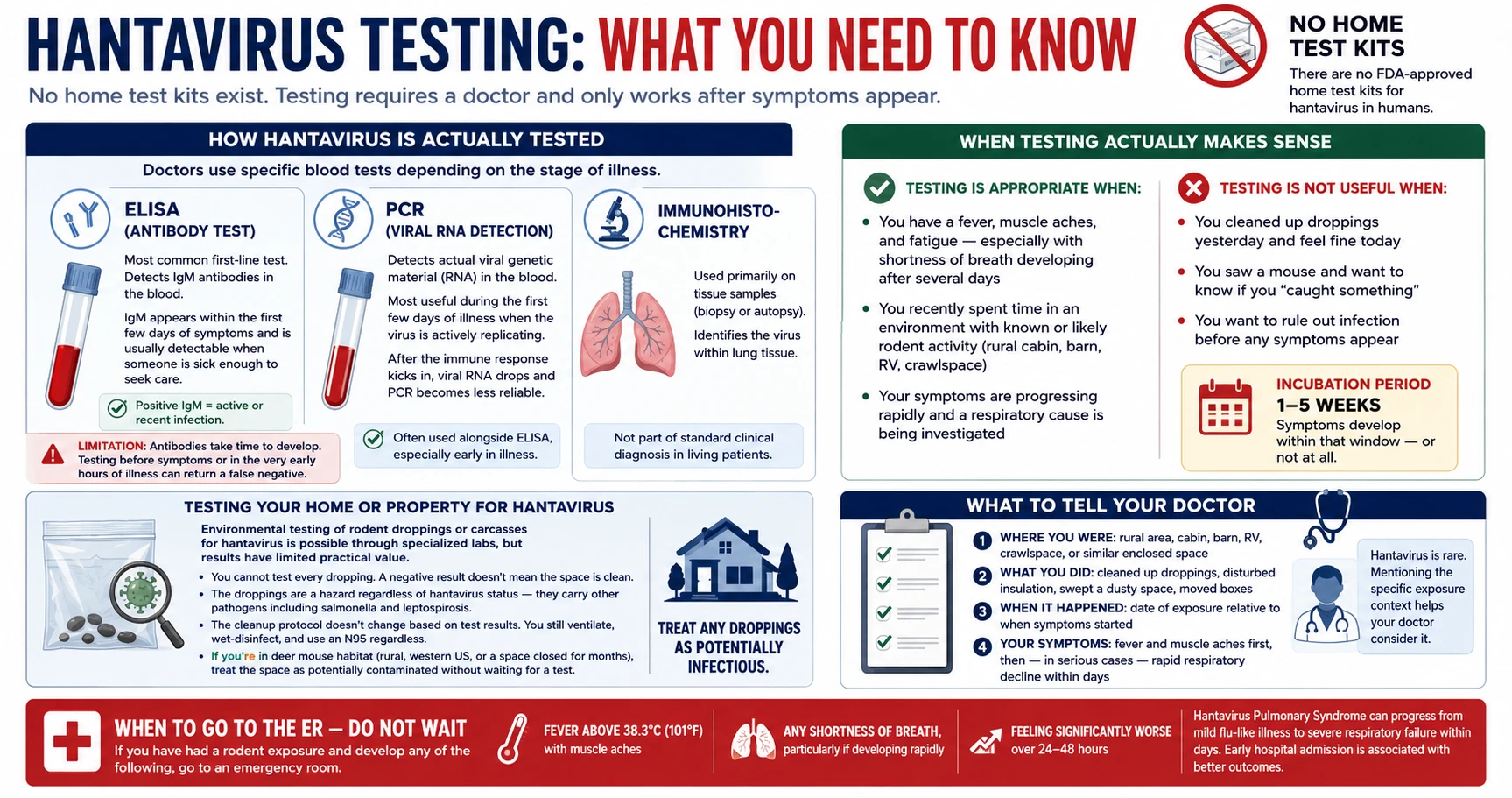
If you found droppings in your cabin and you're wondering whether you can buy a test kit to check if you were exposed — that product doesn't exist. There are no home hantavirus test kits. Testing is done in a clinical laboratory, requires a doctor's order, and only gives useful results after symptoms have already started.
Most people searching for "hantavirus test kit" fall into one of three situations: they found droppings and want to know if the space is contaminated, they had a potential exposure and want to know if they're infected before they feel sick, or they've developed symptoms and want confirmation. The answer is different for each.
How Hantavirus Is Actually Tested
When a doctor orders hantavirus testing, two methods are used depending on the stage of illness:
ELISA (Antibody Test)
The most common first-line test. ELISA detects IgM antibodies — the immune system's early-response proteins — in the blood. IgM antibodies appear within the first few days of symptomatic illness and are usually detectable by the time someone is sick enough to seek medical care.
A positive IgM result confirms active or recent hantavirus infection. Paired testing (IgM + IgG) can help distinguish acute infection from past exposure.
Limitation: Antibodies take time to develop. Testing before symptoms — or in the very early hours of illness — can return a false negative.
PCR (Viral RNA Detection)
Polymerase chain reaction testing detects actual viral genetic material in the blood. It is most useful during the first few days of illness, when the virus is actively replicating. After the immune system mounts its response, viral RNA levels drop and PCR becomes less reliable.
PCR is often used alongside ELISA in suspected cases, particularly when the clinical picture strongly suggests hantavirus but the antibody test is not yet positive.
Immunohistochemistry
Used primarily on tissue samples — either from biopsy or autopsy. This method identifies the virus within lung tissue and is not part of standard clinical diagnosis in living patients.
When Testing Actually Makes Sense
The decision to test is based on symptoms, not on the fact of exposure alone.
Testing is appropriate when:
- You have a fever, muscle aches, and fatigue — especially with shortness of breath developing after several days
- You recently spent time in an environment with known or likely rodent activity (rural cabin, barn, RV, crawlspace)
- Your symptoms are progressing rapidly and a respiratory cause is being investigated
Testing is not useful when:
- You cleaned up droppings yesterday and feel fine today
- You saw a mouse and want to know if you "caught something"
- You want to rule out infection before any symptoms appear
The incubation period for hantavirus is 1–5 weeks. If you had a genuine exposure, symptoms would develop within that window — or not at all. A blood test taken the day after cleaning a cabin will not tell you whether infection will occur.
Testing Your Home or Property for Hantavirus
Some people want to know whether the droppings they found actually contain hantavirus — rather than testing themselves.
A small number of environmental and wildlife laboratories offer PCR testing of rodent droppings or carcasses for hantavirus. This is used primarily in research and public health surveillance contexts, not routine residential situations.
Why environmental testing rarely changes anything in practice:
- You cannot test every dropping. A negative result on a sample doesn't mean the space is clean.
- The droppings are a hazard regardless of hantavirus status — they carry other pathogens including salmonella and leptospirosis.
- The cleanup protocol doesn't change based on test results. You still ventilate, wet-disinfect, and use an N95 regardless.
- If you're in deer mouse habitat (rural, western US, or a space closed for months), treat the space as potentially contaminated without waiting for a test.
What to Tell Your Doctor
If you visit a doctor concerned about hantavirus exposure, be specific:
- Where you were: rural area, cabin, barn, RV, crawlspace, or similar enclosed space
- What you did: cleaned up droppings, disturbed insulation, swept a dusty space, moved boxes
- When it happened: date of exposure relative to when symptoms started
- Your symptoms: the typical progression is fever and muscle aches first, then — in serious cases — rapid respiratory decline within days
Hantavirus is rare enough that many emergency room physicians may not immediately consider it. Mentioning the specific exposure context helps. If you are in a western US state and have respiratory symptoms after a rodent exposure, say so explicitly.
When to Go to the ER
If you have had a rodent exposure and develop any of the following, go to an emergency room — do not wait:
- Fever above 38.3°C (101°F) with muscle aches
- Any shortness of breath, particularly if developing rapidly
- Feeling significantly worse over 24–48 hours
Hantavirus Pulmonary Syndrome can progress from mild flu-like illness to severe respiratory failure within days. Early hospital admission is associated with better outcomes because supportive care — including oxygen and, in severe cases, ECMO — can be initiated before the critical phase.
Official Sources
- CDC Hantavirus: Signs & Symptoms — clinical presentation and testing guidance
- CDC Hantavirus: Healthcare Providers — clinical diagnosis and laboratory testing protocols
Sources & References
- CDC — Centers for Disease Control and Prevention
Hantavirus: Prevention, Symptoms & Control
- WHO — World Health Organization
Hantavirus Disease: Fact Sheet
All health claims on this page are verified against the primary sources listed above. View our Editorial Policy
Frequently Asked Questions
Medical Disclaimer
The information on this page is for educational purposes only and is not medical advice. If you believe you may have been exposed to hantavirus or are experiencing symptoms, contact a qualified healthcare professional or local health authority immediately.