Can Dogs Get Hantavirus?
The Short Answer
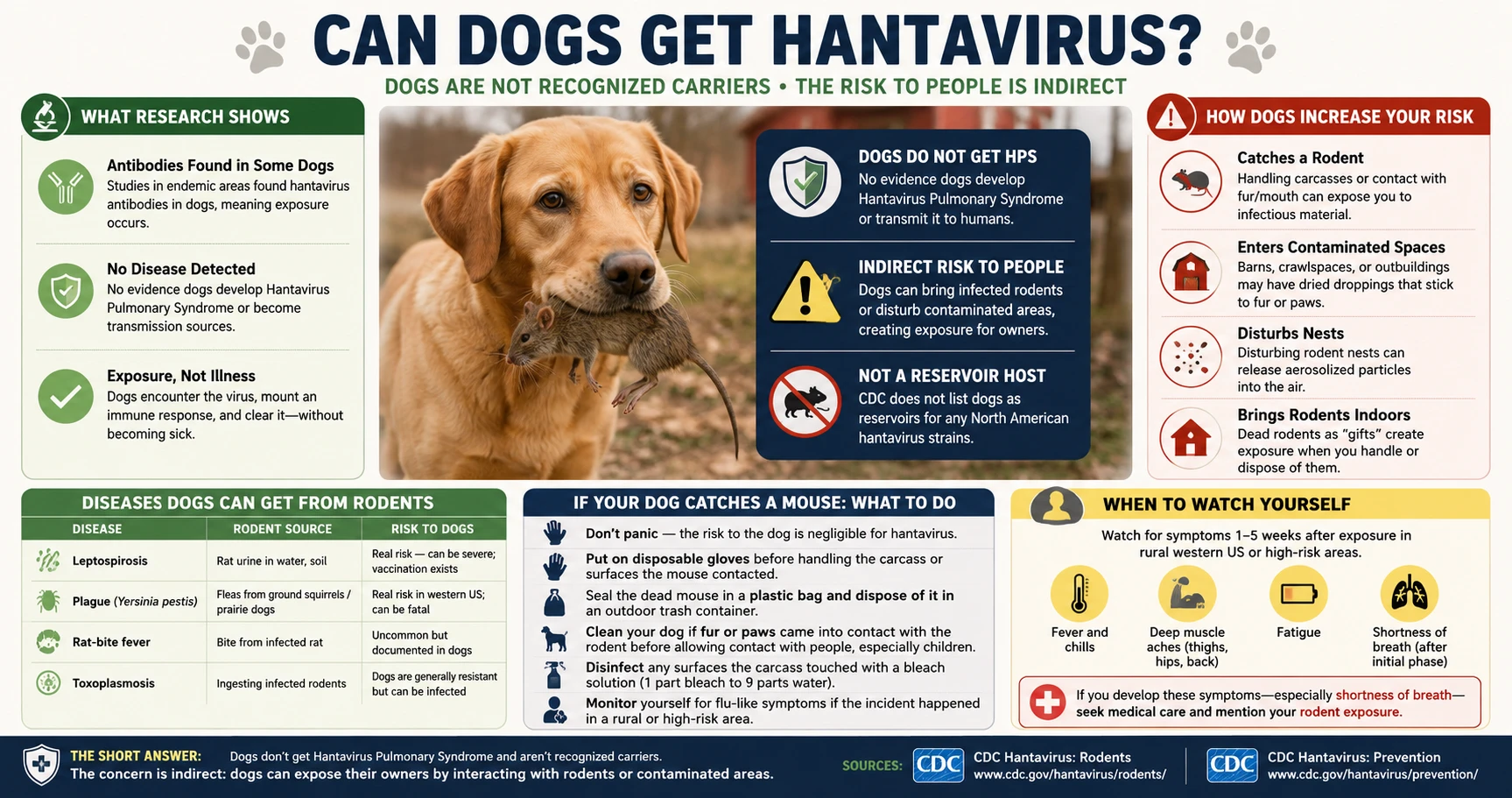
Dogs are not recognized carriers of hantavirus and do not develop Hantavirus Pulmonary Syndrome. If your dog killed a mouse or sniffed around a space with droppings, the dog itself is almost certainly not at meaningful risk. The concern for dog owners is indirect: a dog that catches deer mice or disturbs contaminated spaces can bring infected material into contact with the people living around them.
What Research Shows About Dogs and Hantavirus
Studies on dogs in hantavirus-endemic areas have found hantavirus antibodies in some dogs — meaning those dogs were exposed to the virus at some point. This makes sense: dogs often hunt mice, investigate rodent burrows, and spend time in environments where hantavirus-carrying rodents live.
But antibody presence without disease is the key point. The same studies found no evidence that dogs develop Hantavirus Pulmonary Syndrome or sustain the kind of infection that would make them a transmission source. Dogs appear to encounter the virus, mount an immune response, and clear it — much the way many animal species develop antibodies to pathogens without becoming clinically ill.
The CDC does not list dogs as reservoir hosts for any North American hantavirus strains, and there are no documented cases of dog-to-human hantavirus transmission.
The Real Risk: Dogs as a Bridge to Rodents
Where dogs do create hantavirus risk is behavioral, not biological.
Scenarios where a dog increases your exposure:
- The dog catches a deer mouse or other wild rodent. Handling the carcass, or even the dog's fur if the dog carried the rodent in its mouth, creates potential contact with infectious material.
- The dog enters a space with heavy rodent contamination — a barn, crawlspace, or outbuilding — and then comes back into the house, potentially transferring dried fecal particles on fur or paws.
- The dog disturbs a rodent nest in an enclosed space, releasing aerosolized particles.
- The dog brings dead rodents into the home as a "gift," requiring you to handle or dispose of them.
None of these create hantavirus risk in the dog. All of them create potential risk for the human doing the handling.
What Diseases Can Dogs Actually Get from Rodents?
While hantavirus isn't a concern for dogs, rodents do carry pathogens that can affect dogs:
| Disease | Rodent Source | Risk to Dogs |
|---|---|---|
| Leptospirosis | Rat urine in water, soil | Real risk — dogs can develop severe illness; vaccinations exist |
| Plague (Yersinia pestis) | Fleas from ground squirrels / prairie dogs | Real risk in western US; can be fatal in dogs |
| Rat-bite fever | Bite from infected rat | Uncommon but documented in dogs |
| Toxoplasmosis | Ingesting infected rodents | Dogs are generally resistant but can be infected |
If your dog is spending time in rural areas of the western US, leptospirosis vaccination and flea prevention are more directly relevant than hantavirus concern.
If Your Dog Catches a Mouse
What to do:
- Don't panic — the risk to the dog is negligible for hantavirus
- Put on disposable gloves before handling the carcass or touching surfaces the mouse contacted
- Seal the dead mouse in a plastic bag and dispose of it in an outdoor trash container
- If the dog's fur or paws came into contact with the rodent, clean the dog before allowing contact with other people, especially children
- Disinfect any surfaces the carcass touched with a bleach solution (1 part bleach to 9 parts water)
- Monitor yourself for flu-like symptoms if the incident happened in rural western US or another high-risk area
What you do not need to do:
- Take the dog to the vet specifically for hantavirus testing (no routine test exists and the dog is not at meaningful risk)
- Quarantine the dog
- Treat the dog for hantavirus exposure
When to Watch Yourself
The dog is usually fine. You're the one to monitor.
If you handled a dead rodent in a rural western US location, or if you were in an area with significant deer mouse activity (cabin, barn, rural property), watch yourself for the following over the next 1–5 weeks:
- Fever and chills
- Deep muscle aches (particularly in the thighs, hips, or back)
- Fatigue
- Shortness of breath developing after the initial flu-like phase
If any of these develop — especially the shortness of breath — seek medical care and mention the rodent exposure.
Official Sources
- CDC Hantavirus: Rodents — recognized reservoir species
- CDC Hantavirus: Prevention — exposure reduction guidance
Sources & References
- CDC — Centers for Disease Control and Prevention
Hantavirus: Prevention, Symptoms & Control
- WHO — World Health Organization
Hantavirus Disease: Fact Sheet
All health claims on this page are verified against the primary sources listed above. View our Editorial Policy
Frequently Asked Questions
Medical Disclaimer
The information on this page is for educational purposes only and is not medical advice. If you believe you may have been exposed to hantavirus or are experiencing symptoms, contact a qualified healthcare professional or local health authority immediately.