Hantavirus in Florida: What's Different in the Southeast
Florida's Hantavirus Is Different
Most of what people know about hantavirus in the US comes from western states — deer mice, Four Corners, cabins, mountains. Florida doesn't fit that picture. The hantavirus strain present in Florida is different, the carrier species is different, and the typical exposure setting is different.
That doesn't mean Florida is risk-free. It means the risk needs to be understood on its own terms.
The Florida Strain: Black Creek Canal Virus
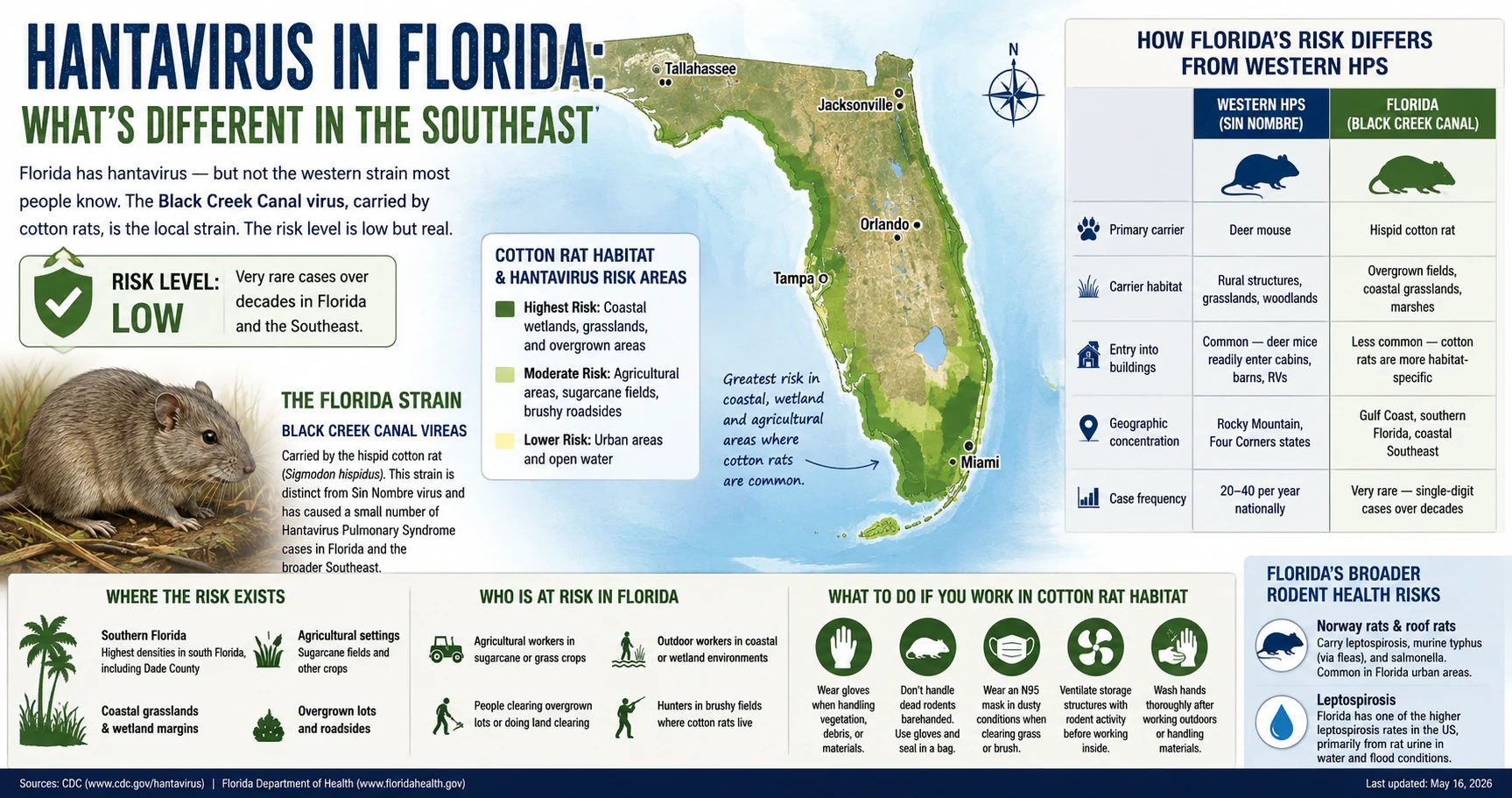
The hantavirus associated with Florida is Black Creek Canal virus — a distinct strain from Sin Nombre, which causes the majority of HPS cases in the western US. Black Creek Canal virus was first identified in 1993, the same year as the Four Corners outbreak, from a case in Dade County in southern Florida.
The reservoir for Black Creek Canal virus is the hispid cotton rat (Sigmodon hispidus), a stocky, medium-sized rodent with coarse gray-brown fur. Cotton rats are common across the southeastern US and Gulf Coast, living in dense grasses, overgrown fields, sugarcane fields, and brushy roadsides.
Like deer mice with Sin Nombre virus, cotton rats carry Black Creek Canal virus persistently — they shed it in urine, droppings, and saliva without developing illness themselves.
How Florida's Risk Differs from Western HPS
| Factor | Western HPS (Sin Nombre) | Florida (Black Creek Canal) |
|---|---|---|
| Primary carrier | Deer mouse | Hispid cotton rat |
| Carrier habitat | Rural structures, grasslands, woodlands | Overgrown fields, coastal grasslands, marshes |
| Entry into buildings | Common — deer mice readily enter cabins, barns, RVs | Less common — cotton rats are more habitat-specific |
| Geographic concentration | Rocky Mountain, Four Corners states | Gulf Coast, southern Florida, coastal Southeast |
| Case frequency | 20–40 per year nationally | Very rare — single-digit cases over decades |
The key practical difference is building entry. Deer mice readily move into closed cabins, outbuildings, and RVs in autumn, which is why so many western US HPS cases involve people opening structures. Cotton rats are less inclined to enter buildings. They stay in dense vegetation — tall grass, sugarcane fields, and overgrown areas — and encounters typically happen outdoors rather than in closed structures.
Where in Florida the Risk Exists
Cotton rats are found across Florida, but their density is highest in:
- Southern Florida: The original Black Creek Canal case came from Dade County, and the dense vegetation of south Florida provides ideal cotton rat habitat
- Coastal grasslands and wetland margins: Areas where open field meets scrub or marsh
- Agricultural settings: Sugarcane fields and similar crops provide food and cover
- Overgrown lots and roadsides: Urban and suburban Florida has cotton rat populations wherever vegetation is dense and undisturbed
The risk is not primarily about homes or cabins — it's about spending time in or disturbing dense grassy or brushy areas with cotton rat populations.
Who Is Actually at Risk in Florida
The exposure risk in Florida is concentrated in specific situations:
- Agricultural workers in sugarcane or other grass crops where cotton rats are common
- People clearing overgrown lots or doing land clearing work in areas with thick grass
- Outdoor workers in coastal or wetland environments with dense vegetation
- Hunters who spend time in brushy fields where cotton rats live
Casual visitors to Florida parks, beaches, or urban areas face negligible hantavirus risk. The risk is associated with specific activities that bring people into contact with cotton rat habitat or the rodents themselves.
What to Do If You Work in Cotton Rat Habitat
The precautions are similar to those recommended for deer mouse exposure in western states, adapted to an outdoor setting:
- Wear gloves when handling vegetation, debris, or material from areas with known rodent activity
- Don't handle dead rodents barehanded — use gloves and seal in a bag for disposal
- Wear an N95 mask if you are working in dusty conditions in areas with rodent activity — cutting tall grass, clearing brush, or disturbing debris
- Ventilate storage structures that may have cotton rat activity before working inside
Florida's Broader Rodent Health Risks
For most Florida residents, hantavirus is not the primary rodent-borne concern. Florida's warm climate and urban environments create different rodent hazards:
- Norway rats and roof rats: Common in Florida urban areas, carrying leptospirosis, murine typhus (via fleas), and salmonella. Roof rats in attics and around structures are a more common concern than hantavirus.
- Leptospirosis: Florida has one of the higher leptospirosis rates in the US, primarily from rat urine in water and flood conditions. This is the rodent-borne disease Floridians should be more aware of.
Official Sources
- Florida Department of Health: Hantavirus — state surveillance
- CDC Hantavirus: Rodents — reservoir species including cotton rat
- CDC Rodent Control — species-specific disease risks
Sources & References
- CDC — Centers for Disease Control and Prevention
Hantavirus: Prevention, Symptoms & Control
- cdc.gov — Index
https://www.cdc.gov/hantavirus/php/surveillance/index.html
- floridahealth.gov — Index
https://floridahealth.gov/diseases-and-conditions/hanta-pulmonary-syndrome/index.html
All health claims on this page are verified against the primary sources listed above. View our Editorial Policy
Frequently Asked Questions
Medical Disclaimer
The information on this page is for educational purposes only and is not medical advice. If you believe you may have been exposed to hantavirus or are experiencing symptoms, contact a qualified healthcare professional or local health authority immediately.