Which Animals Carry Hantavirus? A Species-by-Species Answer
Why This Question Gets Confusing
When people read that hantavirus is a rodent-borne disease, the natural next question is: which rodents? The category is large. Rodents include mice, rats, squirrels, chipmunks, beavers, voles, prairie dogs, and dozens of other species. The answer — it's a specific short list, not "rodents in general" — is not obvious.
Not every rodent carries hantavirus. Not every mouse does. Hantaviruses are highly specific: each strain evolved alongside one particular host species and rarely jumps to others in ways that create sustained transmission. Understanding which animals are actually on the list — and which aren't — cuts through a lot of unnecessary worry.
The Actual Carriers (US Hantavirus Strains)
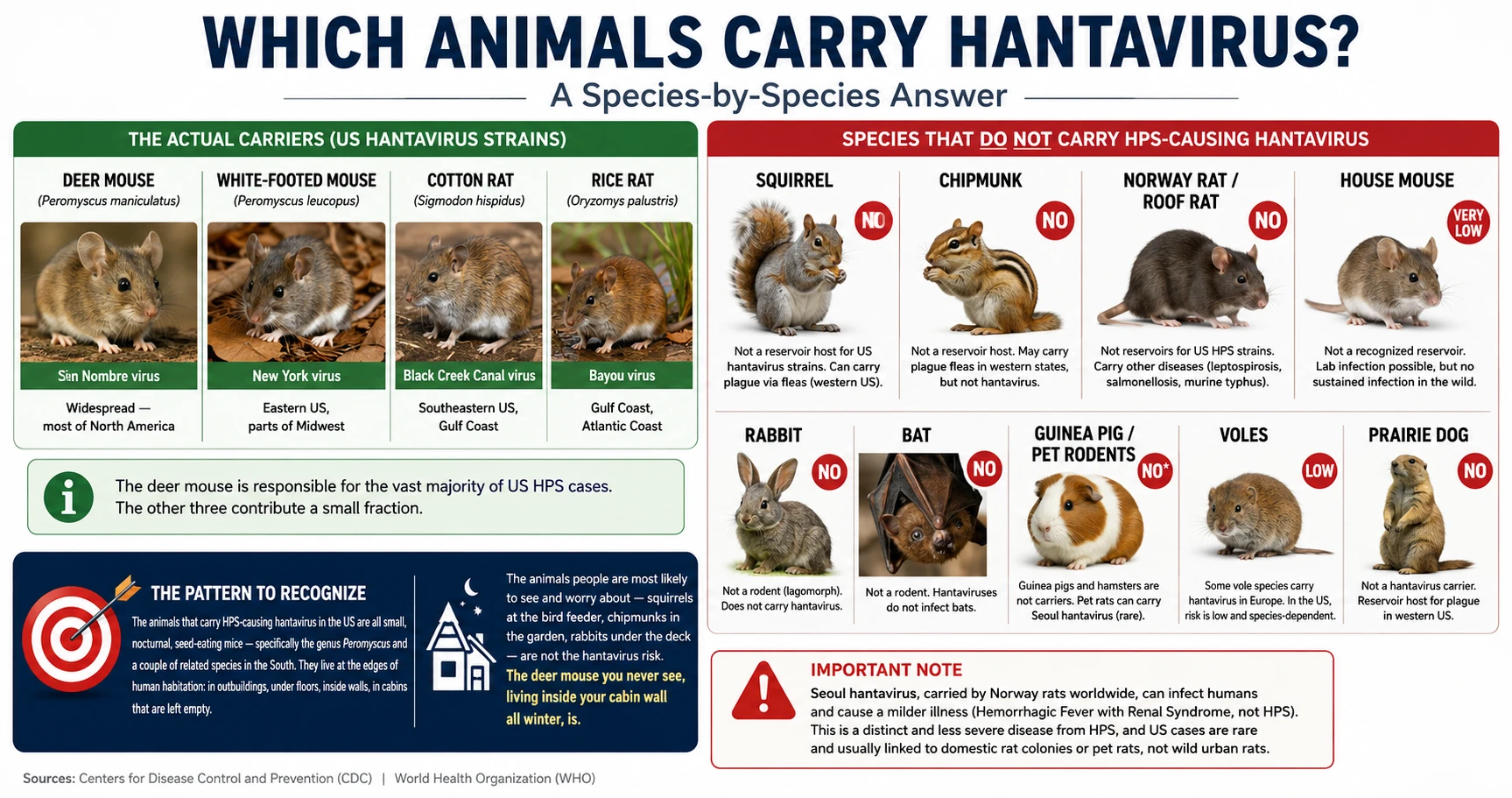
The four rodent species responsible for Hantavirus Pulmonary Syndrome cases in the US:
| Species | Hantavirus Strain | Region |
|---|---|---|
| Deer mouse (Peromyscus maniculatus) | Sin Nombre virus | Widespread — most of North America |
| White-footed mouse (Peromyscus leucopus) | New York virus | Eastern US, parts of Midwest |
| Cotton rat (Sigmodon hispidus) | Black Creek Canal virus | Southeastern US, Gulf Coast |
| Rice rat (Oryzomys palustris) | Bayou virus | Gulf Coast, Atlantic Coast |
The deer mouse is responsible for the vast majority of US HPS cases. The other three contribute a small fraction. Everyone else on the animal list below is not on this list.
Species That Do NOT Carry HPS-Causing Hantavirus
Squirrels
Hantavirus risk: No.
Ground squirrels and tree squirrels are not reservoir hosts for any of the hantavirus strains that cause HPS in the US. They're not being overlooked — they've been studied — and they simply don't carry these viruses in any meaningful way.
What squirrels do carry: fleas that can transmit plague (Yersinia pestis). In western states where ground squirrel colonies exist, plague is a real though rare concern. If you're around ground squirrel burrows in the western US, flea exposure is the risk to think about — not hantavirus.
Chipmunks
Hantavirus risk: No.
Chipmunks are in the squirrel family (Sciuridae), not the mouse family (Muridae). They are not established hosts for US hantavirus strains. As with squirrels, the more relevant concern in chipmunk habitat is plague fleas, not hantavirus.
Norway Rats and Roof Rats
Hantavirus risk: No (for US HPS strains).
Common US rat species — the Norway rat (Rattus norvegicus) and roof rat (Rattus rattus) — are not recognized reservoirs for Sin Nombre or the other strains causing HPS in North America. Extensive studies have confirmed this.
That said, rats are not harmless. Norway rats carry leptospirosis, salmonellosis, and rat-bite fever. Roof rats add murine typhus. Rats warrant serious cleanup precautions — just not specifically for hantavirus.
One footnote: Seoul hantavirus, carried by Norway rats worldwide, can infect humans and cause a milder illness (Hemorrhagic Fever with Renal Syndrome, not HPS). This is a distinct and less severe disease from HPS, and the US cases are rare and usually linked to domestic rat colonies or pet rats, not wild urban rats.
House Mice
Hantavirus risk: Very low.
The house mouse (Mus musculus) is not a recognized reservoir for North American hantavirus strains. Lab studies have confirmed house mice can be infected under controlled conditions but do not develop sustained infection or shed the virus in the wild. No confirmed US HPS case has been traced to a house mouse. See the full analysis at Can House Mice Carry Hantavirus?
Rabbits
Hantavirus risk: No.
Rabbits (order Lagomorpha) are not rodents, and they don't carry hantavirus. They carry their own set of diseases — tularemia, rabbit fever — but hantavirus is not one of them. No cleanup precautions for hantavirus are needed when dealing with rabbit droppings or carcasses.
Bats
Hantavirus risk: No.
Bats (order Chiroptera) are not rodents. Hantaviruses evolved alongside rodent hosts and do not infect bats. Bat carcasses and droppings (guano) carry real health risks — primarily histoplasmosis (a fungal infection from guano) and rabies — but hantavirus is not among them.
Guinea Pigs and Pet Rodents
Hantavirus risk: No (with one important exception).
Domestic guinea pigs are not hantavirus carriers. Domestic hamsters are generally not carriers either.
The exception: domestic rats have occasionally been linked to Seoul hantavirus transmission in the US, because Norway rats (the wild counterpart) are the Seoul virus reservoir globally. Pet rat colonies have been the source of rare Seoul virus outbreaks. This is a distinct disease from HPS and causes milder illness.
Voles
Hantavirus risk: Low, species-dependent.
Voles (various genera) occupy an interesting middle ground. Some vole species carry hantavirus strains in Europe (Puumala virus, carried by bank voles, causes a mild HFRS). In North America, prairie voles and other species have been studied but are not considered established US HPS reservoirs. The risk from voles in the US is much lower than from deer mice.
Prairie Dogs
Hantavirus risk: No.
Prairie dogs are not hantavirus carriers. They are, however, reservoir hosts for plague — a serious risk in the western US. Prairie dog die-offs in colonies can precede human plague cases. Hantavirus is not the concern.
The Pattern to Recognize
The animals that carry HPS-causing hantavirus in the US are all small, nocturnal, seed-eating mice — specifically the genus Peromyscus and a couple of related species in the South. They tend to live at the edges of human habitation: in outbuildings, under floors, inside walls, in cabins that are left empty. They're not the animals you typically encounter in the open.
The animals people are most likely to see and worry about — squirrels at the bird feeder, chipmunks in the garden, rabbits under the deck — are not the hantavirus risk. The deer mouse you never see, living inside your cabin wall all winter, is.
Official Sources
- CDC Hantavirus: Rodents — recognized reservoir species and geographic range
- CDC Rodent Control — disease risks by species
Sources & References
- CDC — Centers for Disease Control and Prevention
Hantavirus: Prevention, Symptoms & Control
- WHO — World Health Organization
Hantavirus Disease: Fact Sheet
All health claims on this page are verified against the primary sources listed above. View our Editorial Policy
Frequently Asked Questions
Medical Disclaimer
The information on this page is for educational purposes only and is not medical advice. If you believe you may have been exposed to hantavirus or are experiencing symptoms, contact a qualified healthcare professional or local health authority immediately.