Can House Mice Carry Hantavirus?
The Short Answer
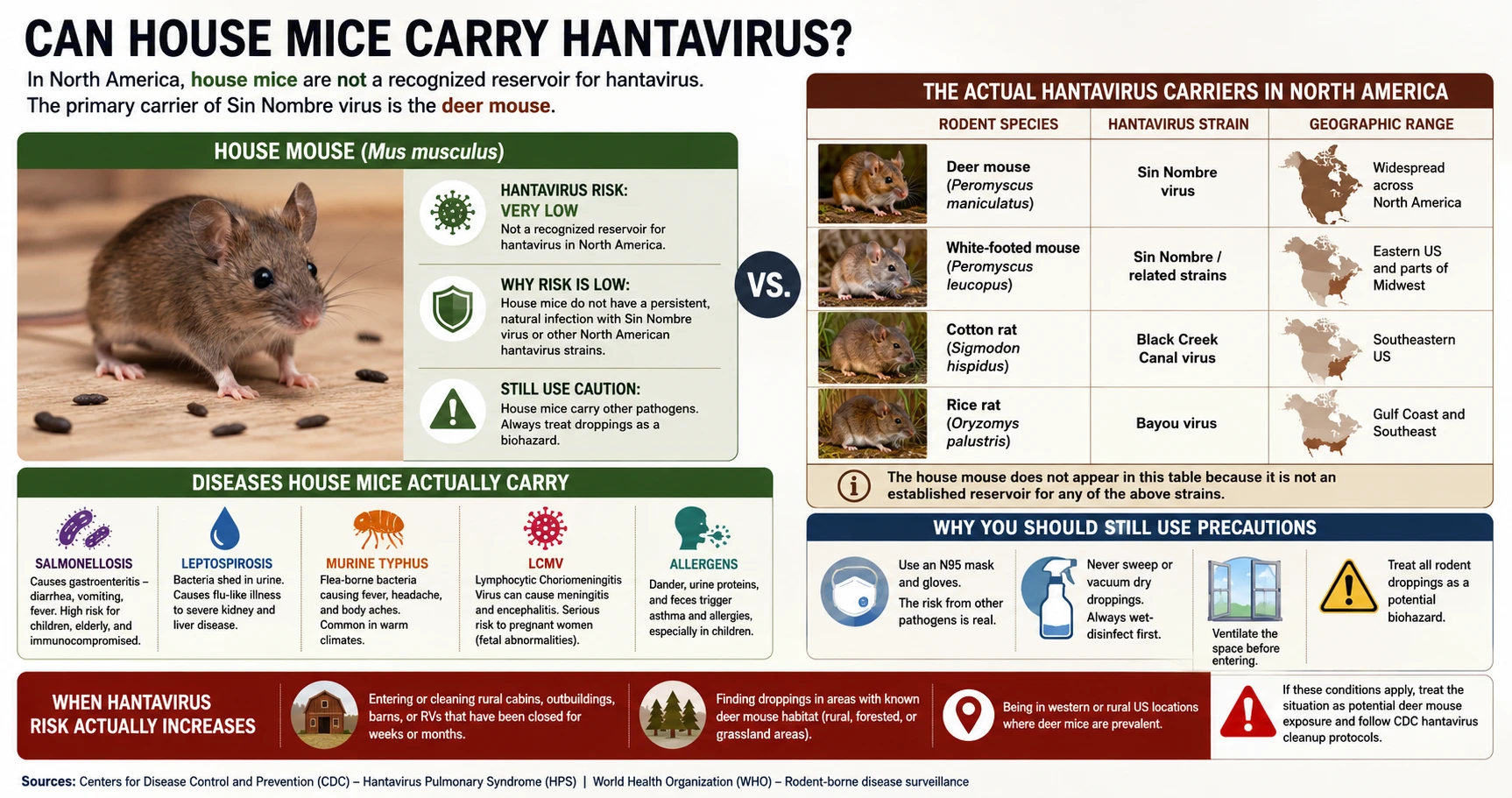
If you found droppings in your kitchen, garage, or apartment and you're wondering whether to panic about hantavirus — the short answer is probably no. In North America, house mice (Mus musculus) are not a recognized hantavirus carrier. The strain responsible for Hantavirus Pulmonary Syndrome is carried by deer mice (Peromyscus maniculatus), not house mice. If you have confirmed house mice in your home, your hantavirus risk is very low. That said, house mice carry other pathogens that warrant the same careful cleanup approach.
Why Deer Mice, Not House Mice
The deer mouse doesn't just occasionally pick up hantavirus — it carries the virus permanently without getting sick, shedding it continuously in urine, droppings, and saliva throughout its life. That persistent, lifelong shedding is what makes deer mice dangerous in enclosed spaces like cabins and RVs that have been shut up for months.
House mice haven't developed that relationship with Sin Nombre or the other North American hantavirus strains. Lab studies have confirmed house mice can be infected under controlled conditions, but it doesn't happen in any meaningful way in wild populations. They don't shed it long-term, and there's no established transmission cycle. That's why every confirmed HPS case traces back to deer mice or a closely related wild rodent — not the mouse most people find in their kitchen.
The Actual Hantavirus Carriers in North America
| Rodent Species | Hantavirus Strain | Geographic Range |
|---|---|---|
| Deer mouse (Peromyscus maniculatus) | Sin Nombre virus | Widespread across North America |
| White-footed mouse (Peromyscus leucopus) | Sin Nombre / related strains | Eastern US and parts of Midwest |
| Cotton rat (Sigmodon hispidus) | Black Creek Canal virus | Southeastern US |
| Rice rat (Oryzomys palustris) | Bayou virus | Gulf Coast and Southeast |
The house mouse does not appear in this table because it is not an established reservoir for any of the above strains.
What Diseases Do House Mice Actually Carry?
While house mice are not hantavirus carriers, they are associated with several other health risks:
Salmonellosis
House mice contaminate food preparation surfaces, stored food, and utensils with Salmonella bacteria shed in their droppings and urine. Salmonellosis causes gastroenteritis — diarrhea, vomiting, fever — typically within 12–72 hours of exposure. Children, the elderly, and immunocompromised individuals face the greatest severity risk.
Leptospirosis
House mice shed Leptospira bacteria in urine. Humans can be infected through contact with contaminated water or surfaces, particularly through cuts in the skin or via mucous membranes. Leptospirosis ranges from mild flu-like illness to severe Weil's disease affecting kidneys and liver.
Murine Typhus
Fleas that infest house mice can transmit Rickettsia typhi, causing murine typhus. This is primarily a concern in warm climates (Southern US, Hawaii) where flea populations are high year-round.
Lymphocytic Choriomeningitis Virus (LCMV)
The house mouse is the primary reservoir for LCMV, a virus that can cause meningitis and encephalitis in humans. LCMV is transmitted through contact with mouse droppings, urine, or saliva, or through bites. It is of particular concern for pregnant women, as it can cause severe fetal abnormalities.
Allergens
Mouse dander, urine proteins, and fecal material are potent indoor allergens. Chronic exposure to house mouse allergens is associated with worsening asthma, particularly in urban populations.
Why You Should Still Use Precautions
Even though hantavirus risk from house mice is very low, the correct cleanup protocol remains the same as for any rodent droppings. Droppings can carry multiple disease-causing germs and the specific species is rarely confirmed before cleanup begins. The cost of using an N95 mask and gloves is trivial compared to the risk of LCMV, salmonella, or leptospirosis exposure.
Never sweep or vacuum dry mouse droppings. Always wet-disinfect first. Ventilate the space before entering.
When Hantavirus Risk Actually Increases
For most urban and suburban households, this section doesn't apply — but if any of the following describes your situation, the risk picture changes significantly:
- You enter or clean a rural cabin, outbuilding, barn, or RV that has been closed for weeks or months
- You find droppings in areas with known deer mouse habitat (rural, forested, or grassland areas)
- You are in a western or rural US location where deer mice are prevalent
If any of these conditions apply, treat the situation as a potential deer mouse exposure and follow CDC hantavirus-specific cleanup protocols.
Official Sources
- CDC Hantavirus: Rodents — reservoir species and hantavirus strain data
- CDC Rodent Control — species identification and control
Sources & References
- CDC — Centers for Disease Control and Prevention
Hantavirus: Prevention, Symptoms & Control
- WHO — World Health Organization
Hantavirus Disease: Fact Sheet
All health claims on this page are verified against the primary sources listed above. View our Editorial Policy
Frequently Asked Questions
Medical Disclaimer
The information on this page is for educational purposes only and is not medical advice. If you believe you may have been exposed to hantavirus or are experiencing symptoms, contact a qualified healthcare professional or local health authority immediately.