WSU Study: Nearly 1 in 3 Rodents in the Pacific Northwest Show Signs of Hantavirus
The Study
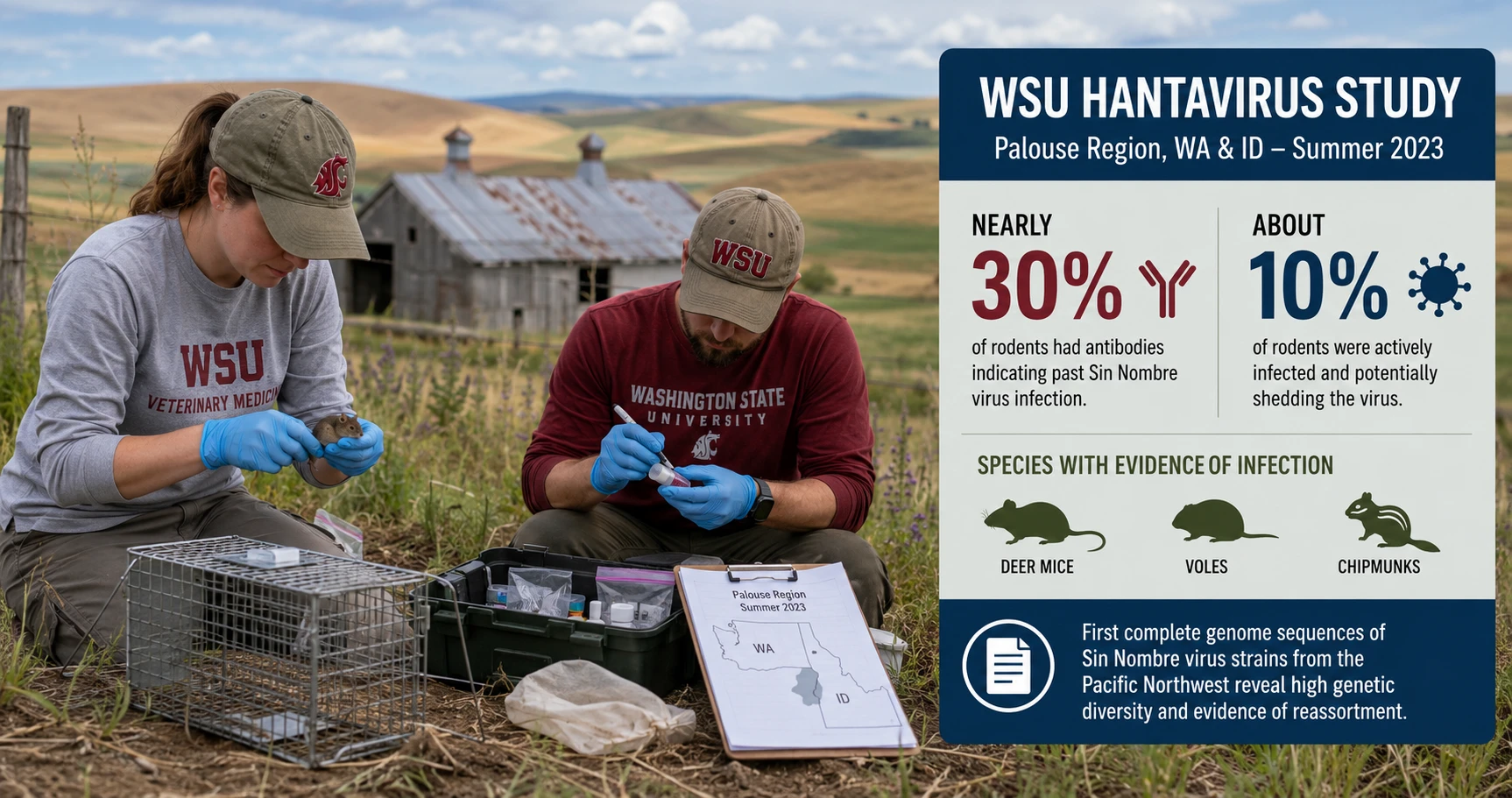
Researchers at Washington State University's College of Veterinary Medicine sampled 189 rodents across the Palouse region in summer 2023 — Whitman County in Washington and Latah and Benewah counties in Idaho. They tested for both active Sin Nombre virus (SNV) infection and antibodies indicating past infection.
The results, published in the CDC's Emerging Infectious Diseases journal, found nearly 30% of animals showed evidence of prior infection based on antibody presence. About 10% were actively infected, meaning they were carrying the virus and could potentially shed it into the environment through urine, droppings, and saliva.
"We were surprised both by how common the virus was locally and by how little data existed for the Northwest," said Stephanie Seifert, the study's lead researcher and principal investigator of the Molecular Ecology of Zoonotic and Animal Pathogens lab in WSU's Paul G. Allen School for Global Health. "We're really just beginning to understand how widespread and complex this virus is in rodent populations here."
What They Found in the Field
Sampled animals included deer mice, voles, and chipmunks. The researchers detected both antibodies and active infections in deer mice and voles — suggesting the virus may circulate between species, not just within deer mice as has long been assumed.
The team also produced the first complete genome sequences of SNV strains from the Pacific Northwest. The sequences revealed high levels of genetic diversity and evidence of viral reassortment, a process where two virus strains swap genetic segments. That genetic data gives public health officials and researchers a baseline to track how the virus evolves in the region going forward.
A Known Virus, Less-Known Prevalence
Sin Nombre virus is not new to the Pacific Northwest. Washington State has recorded approximately 45 confirmed cases of hantavirus pulmonary syndrome (HPS) since 1993, nearly all from eastern Washington. Idaho and Oregon have added to a combined regional total of 109 cases across the three states between 1993 and 2022, out of 864 total US cases nationally.
What the study adds is local prevalence data that had not previously been collected. Knowing that roughly one in ten rodents in the Palouse is actively infected is useful context for anyone spending time in farm buildings, rural structures, or outdoor areas where deer mice are common.
The Human Exposure Gap
Human HPS cases remain rare despite the prevalence found in rodents. Researchers think some infections may be going undetected.
"People may be exposed more often than we realize, but severe cases are more likely to be tested for hantavirus," said co-author Pilar Fernandez, a disease ecologist in the Allen School. "Understanding that gap — how exposure translates into disease — is the next big step."
The researchers plan to expand the work to study how often people are actually exposed and how behavior affects risk, pending additional funding.
How the Virus Reaches People
SNV does not spread between people. Human infections occur when people inhale airborne particles from contaminated rodent droppings, urine, or nesting material — particularly in enclosed spaces where disturbed material becomes airborne. Health officials recommend ventilating closed structures before entering and using wet-cleaning methods rather than sweeping or using leaf blowers, which can send contaminated dust into the air.
The 10% active infection rate found in Palouse rodents is a reminder that deer mice in agricultural areas, barns, cabins, and outbuildings across eastern Washington and adjacent Idaho are a realistic source of exposure — not a theoretical one.
Sources & References
- CDC — Centers for Disease Control and Prevention
Hantavirus: Prevention, Symptoms & Control
- news.wsu.edu — Wsu Study Finds High Prevalence Of Hantavirus In Some Parts Of Pacific Northwest
https://news.wsu.edu/press-release/2026/05/21/wsu-study-finds-high-prevalence-of-hantavirus-in-some-parts-of-pacific-northwest/
- wwwnc.cdc.gov — Eid
https://wwwnc.cdc.gov/eid/
All health claims on this page are verified against the primary sources listed above. View our Editorial Policy
Frequently Asked Questions
Medical Disclaimer
The information on this page is for educational purposes only and is not medical advice. If you believe you may have been exposed to hantavirus or are experiencing symptoms, contact a qualified healthcare professional or local health authority immediately.