Rodent Population Booms: Why Some Years Carry Higher Hantavirus Risk
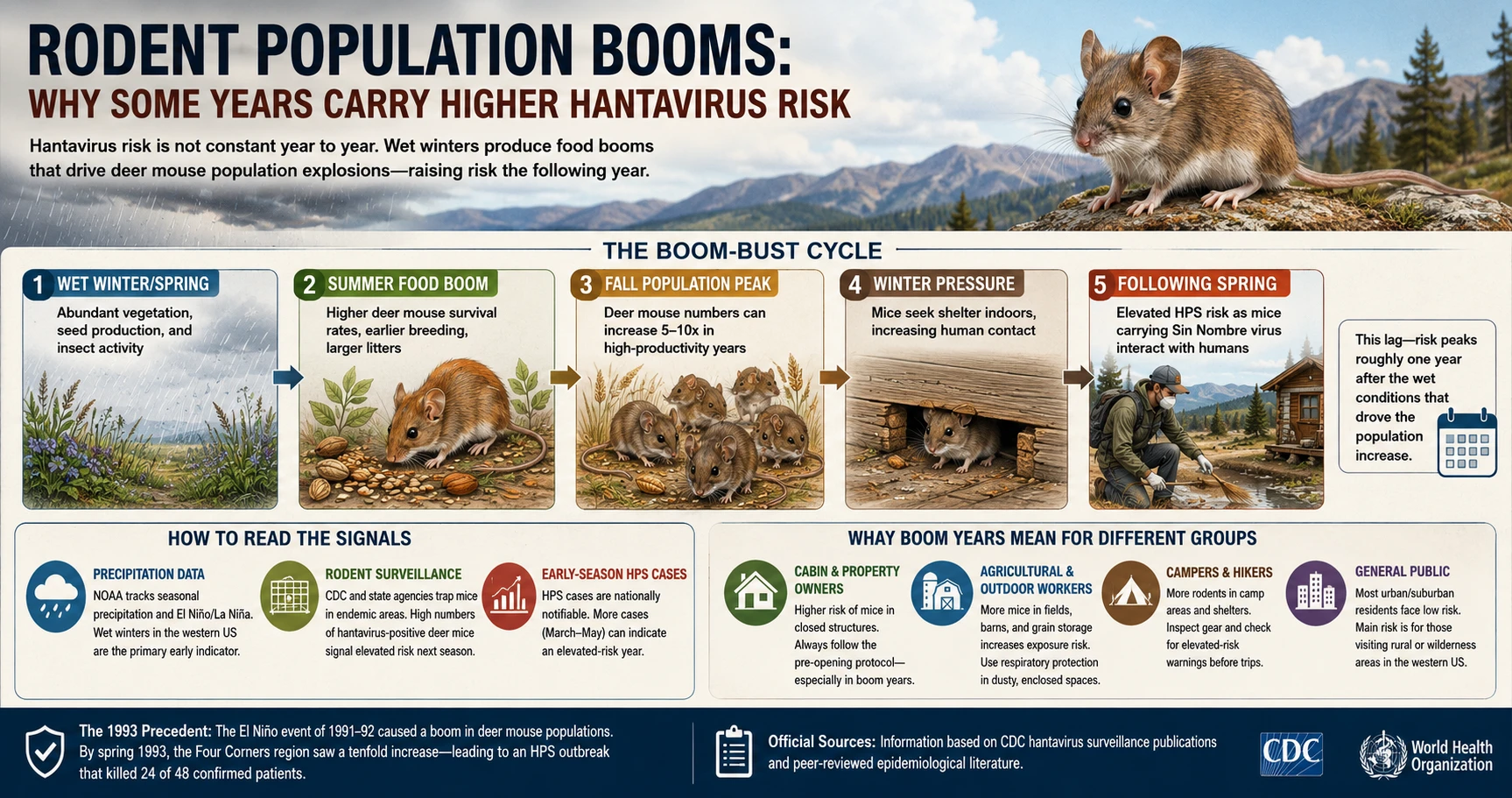
The Boom-Bust Cycle
Deer mouse populations are not stable. They follow a predictable boom-bust cycle driven primarily by food availability, which is in turn driven by precipitation.
The sequence:
- Wet winter/spring → abundant vegetation, seed production, and insect activity
- Summer food boom → higher deer mouse survival rates, earlier breeding, larger litters
- Fall population peak → deer mouse numbers can increase 5–10x in high-productivity years
- Winter pressure → mice seek shelter indoors, increasing human contact
- Following spring → elevated HPS risk as mice carrying Sin Nombre virus interact with humans in cleanup, outdoor work, and camping scenarios
This lag — risk peaks roughly one year after the wet conditions that drove the population increase — is why health authorities track precipitation patterns as a predictive indicator.
The 1993 Precedent
The first recognized US hantavirus outbreak was directly linked to a boom year. The El Niño event of 1991–92 produced unusually wet conditions across the Southwest. By spring 1993, deer mouse populations in the Four Corners region had increased tenfold.
The resulting HPS outbreak killed 24 of 48 confirmed patients. The environmental link was identified quickly and has since been validated across multiple subsequent events.
How to Read the Signals
Precipitation data: The NOAA Climate Prediction Center publishes seasonal precipitation outlooks and El Niño/La Niña status. Wet winters in the western US (particularly the Four Corners region, Pacific Northwest, and Great Plains) are the primary early indicator.
Rodent surveillance: The CDC and state health departments conduct rodent trapping surveys in endemic areas. Elevated prevalence of hantavirus-positive deer mice in a given area, combined with high population density, signals elevated transmission risk for the following season.
Early-season HPS cases: HPS cases are nationally notifiable. An uptick in early-season cases (March–May) can signal an elevated-risk year. CDC updates these surveillance statistics on its hantavirus pages.
What Boom Years Mean for Different Groups
Cabin and property owners in endemic areas: A boom year significantly elevates the risk of finding mice in structures that have been closed over winter. The standard pre-opening protocol (ventilate → PPE → disinfect before touching anything) is always necessary, but especially critical in boom years.
Agricultural and outdoor workers: Increased mouse density in fields, barns, and grain storage increases exposure risk during normal work activities. Workers in endemic areas should use respiratory protection when working in dusty, enclosed agricultural spaces during elevated-risk periods.
Campers and hikers: Boom years are associated with more rodents in camping areas, trail shelters, and wilderness huts. Pre-trip inspection of gear stored in rodent-accessible spaces is particularly important. Checking whether your destination has issued elevated-risk warnings before travel is worthwhile.
General public: For most people in urban and suburban settings, boom years require limited additional action beyond awareness. The primary risk window is people who visit rural properties, cabins, or wilderness areas in the western US.
Sources & References
- CDC — Centers for Disease Control and Prevention
Hantavirus: Prevention, Symptoms & Control
- WHO — World Health Organization
Hantavirus Disease: Fact Sheet
All health claims on this page are verified against the primary sources listed above. View our Editorial Policy
Medical Disclaimer
The information on this page is for educational purposes only and is not medical advice. If you believe you may have been exposed to hantavirus or are experiencing symptoms, contact a qualified healthcare professional or local health authority immediately.