The 2012 Yosemite Hantavirus Outbreak: What Really Happened
What Happened
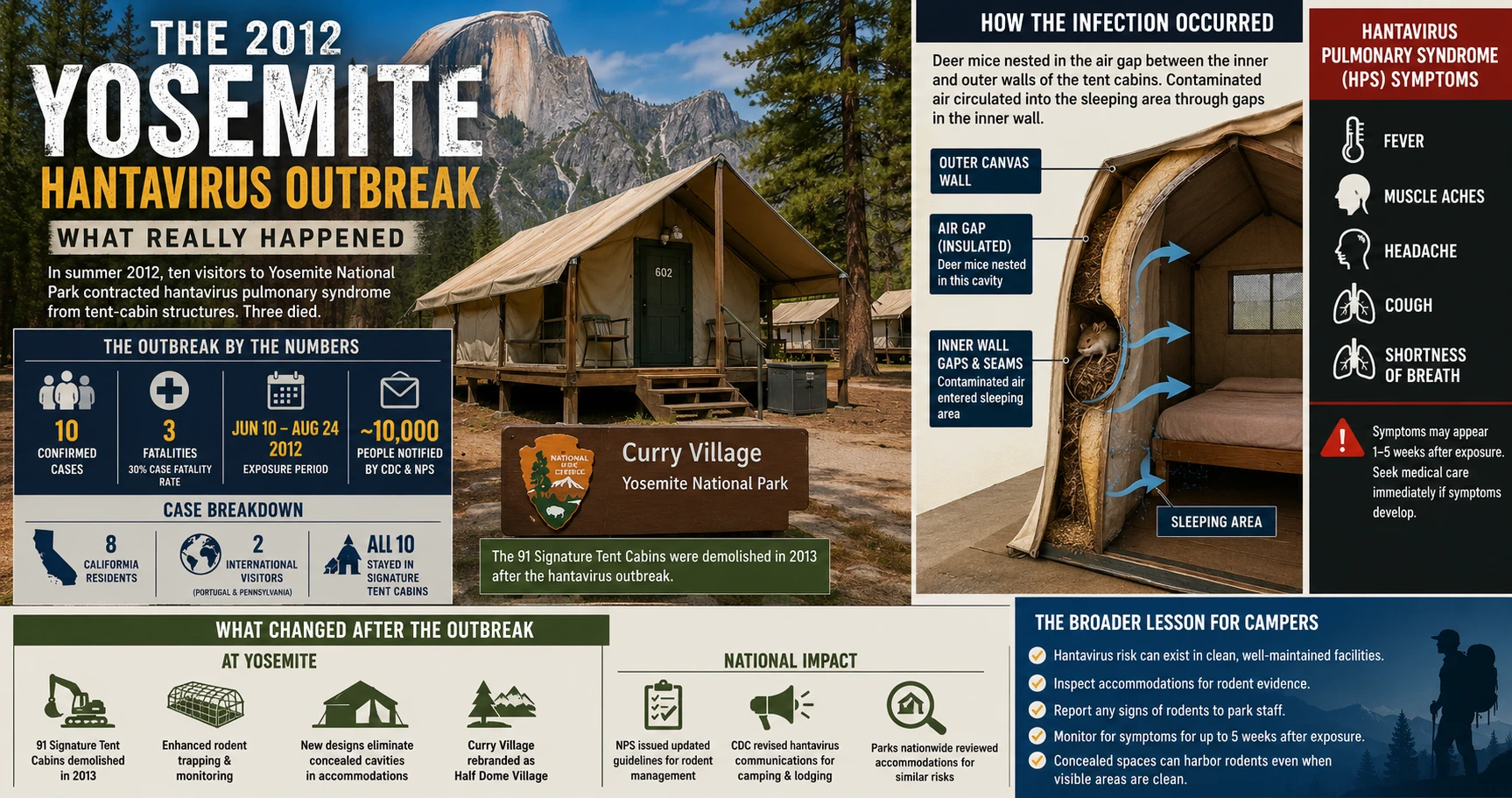
In the summer of 2012, visitors to Yosemite National Park's Curry Village began falling ill with a severe respiratory illness. By August, the CDC had confirmed the first cases of hantavirus pulmonary syndrome (HPS) linked to the park. By the time the investigation concluded, ten people had been infected and three had died.
The source was traced to the Signature Tent Cabins — a premium accommodation at Curry Village consisting of canvas structures with insulated double walls. Deer mice (Peromyscus maniculatus), the primary reservoir for Sin Nombre virus in North America, had colonized the air gap between the inner and outer canvas walls. Contaminated air from these cavities seeped into the sleeping areas.
The Scale of the Response
The outbreak triggered the largest hantavirus public notification effort in US history. Approximately 10,000 people who had stayed in the implicated structures between June 10 and August 24, 2012, were notified by the CDC and National Park Service. This notification was delivered via mail, email, and media coverage.
Of the ten confirmed cases:
- Eight were California residents
- Two were international visitors (one from Portugal, one from Pennsylvania)
- Three fatalities occurred
- All had stayed in Signature Tent Cabins
Why Standard Inspections Missed It
The tent cabins were regularly cleaned and inspected. Visible rodent evidence — droppings, nesting material — was typically removed during routine maintenance. What inspections could not detect was the infestation inside the wall cavities, which were inaccessible without disassembling the structures.
This gap between visible cleanliness and hidden contamination is a key lesson of the outbreak: standard visual inspection protocols are insufficient for detecting hantavirus risk in structures with concealed cavities.
What Changed Afterward
At Yosemite specifically:
- The 91 Signature Tent Cabins were permanently demolished in 2013
- Curry Village was subsequently rebranded as Half Dome Village
- Enhanced rodent trapping and monitoring was implemented throughout the park
- New accommodation designs were required to eliminate concealed cavities
At the national level:
- The National Park Service issued updated guidelines for rodent management in visitor accommodations
- CDC revised its hantavirus communications to specifically address camping and lodging risks
- Park services nationwide reviewed their accommodation structures for similar vulnerabilities
The Broader Lesson for Campers
The 2012 outbreak established that hantavirus risk is not limited to rural cabins or agricultural work — it can occur in well-maintained, widely-used tourist facilities. The risk factors that allowed the outbreak were:
- Concealed rodent habitat (wall cavities inaccessible to cleaning)
- Extended overnight exposure in an enclosed space
- High-use period during peak deer mouse activity in summer
For visitors to national parks, this outbreak underscores the importance of inspecting accommodations for rodent evidence, reporting any signs to park staff, and monitoring for symptoms after returning from high-risk areas.
Sources & References
- CDC — Centers for Disease Control and Prevention
Hantavirus: Prevention, Symptoms & Control
- WHO — World Health Organization
Hantavirus Disease: Fact Sheet
All health claims on this page are verified against the primary sources listed above. View our Editorial Policy
Medical Disclaimer
The information on this page is for educational purposes only and is not medical advice. If you believe you may have been exposed to hantavirus or are experiencing symptoms, contact a qualified healthcare professional or local health authority immediately.