Hondius Case Count Rises to 12 as Dutch Crew Member Hospitalized; 600 Contacts Monitored Across 30 Countries
The Latest Numbers
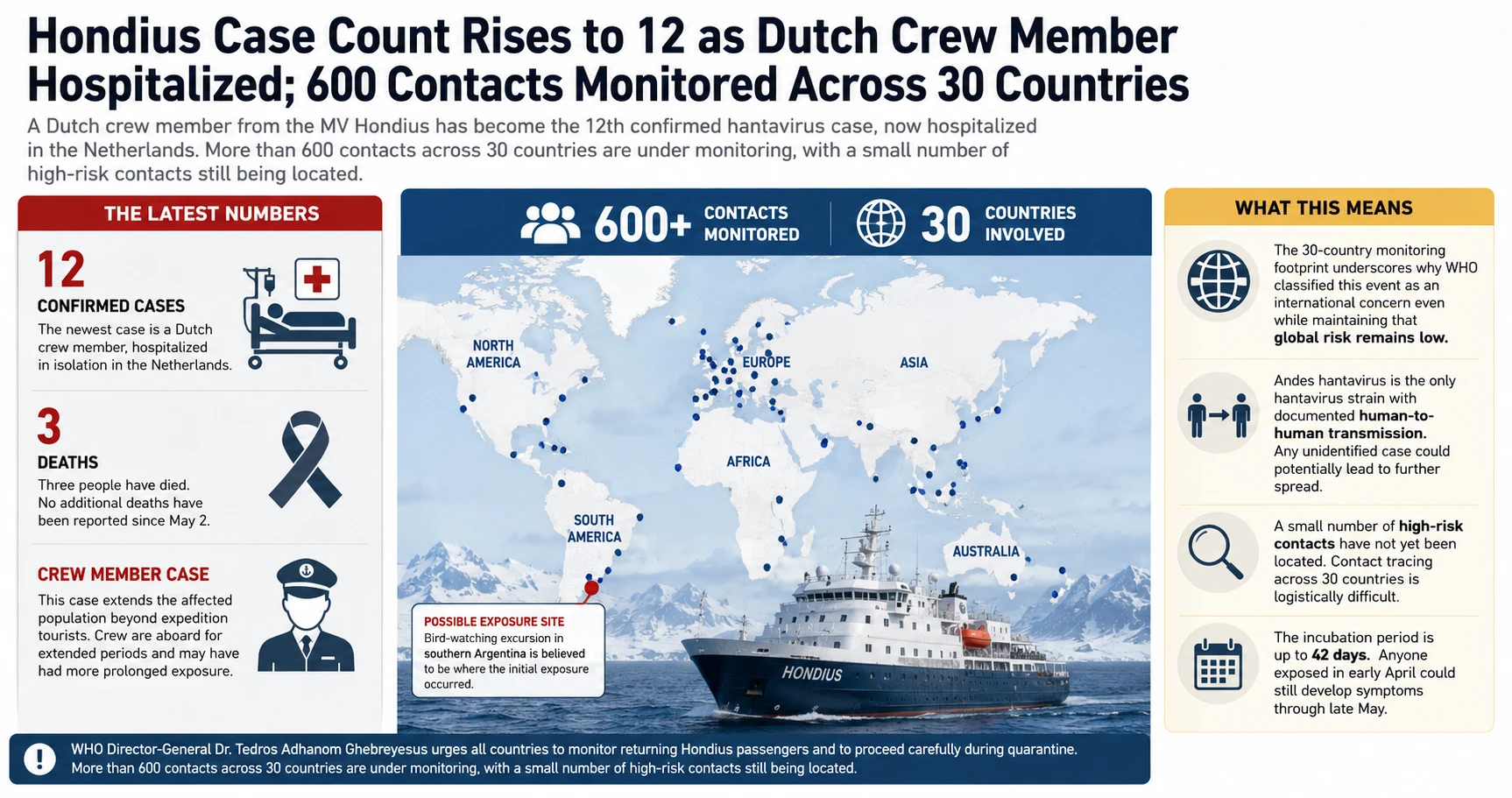
The MV Hondius hantavirus outbreak has reached 12 confirmed cases. The newest is a Dutch crew member — not a passenger — who has been hospitalized in isolation in the Netherlands.
Three people have died. No additional deaths have been reported since May 2.
The crew member case is notable because it extends the affected population beyond expedition tourists. Passengers and crew share close quarters on polar vessels, but their exposure profiles differ. Passengers join for a single voyage; crew are aboard for extended periods and may have had more prolonged contact with whoever carried the virus onto the ship or contracted it during the bird-watching excursion in southern Argentina where the initial exposure is believed to have occurred.
30 Countries, 600 Contacts
The most significant number in the latest WHO update is not the case count — it's the contact tracing scope. More than 600 people across 30 countries are currently being monitored for potential hantavirus exposure linked to the Hondius.
Earlier reporting focused on the 41 Americans under CDC monitoring and a handful of European countries. The full picture is considerably wider. The Hondius carried passengers from dozens of countries on a route that ended in the Canary Islands, and those passengers returned home on commercial flights before many knew an outbreak was underway.
WHO Director-General Dr. Tedros Adhanom Ghebreyesus urged all countries to monitor their returning Hondius passengers and to proceed carefully during quarantine — language reflecting that a small number of high-risk contacts have not yet been located.
What This Means
The 30-country monitoring footprint underscores why WHO classified this event as an international concern even while maintaining that global risk remains low. Andes hantavirus is the only hantavirus strain with documented human-to-human transmission, which means any unidentified case is a potential source of further spread — not just a health risk to the individual.
The unlocated high-risk contacts are the most pressing variable. Contact tracing for an event that began on a ship in the South Atlantic and dispersed passengers across 30 countries is logistically difficult, and the 42-day incubation window means that anyone exposed in early April could still develop symptoms through late May.
For the passengers now in quarantine — including those at the University of Nebraska Medical Center — the timeline for release depends on the 42-day clock that started when quarantine began. For most, that window closes in late June.
Sources & References
- WHO — World Health Organization
Hantavirus Disease: Fact Sheet
- aljazeera.com — Who Says 12th Person Infected With Hantavirus Detected In The Netherlands
https://www.aljazeera.com/news/2026/5/22/who-says-12th-person-infected-with-hantavirus-detected-in-the-netherlands
All health claims on this page are verified against the primary sources listed above. View our Editorial Policy
Medical Disclaimer
The information on this page is for educational purposes only and is not medical advice. If you believe you may have been exposed to hantavirus or are experiencing symptoms, contact a qualified healthcare professional or local health authority immediately.