Hantavirus in Michigan: What Cabin Owners and UP Hunters Need to Know
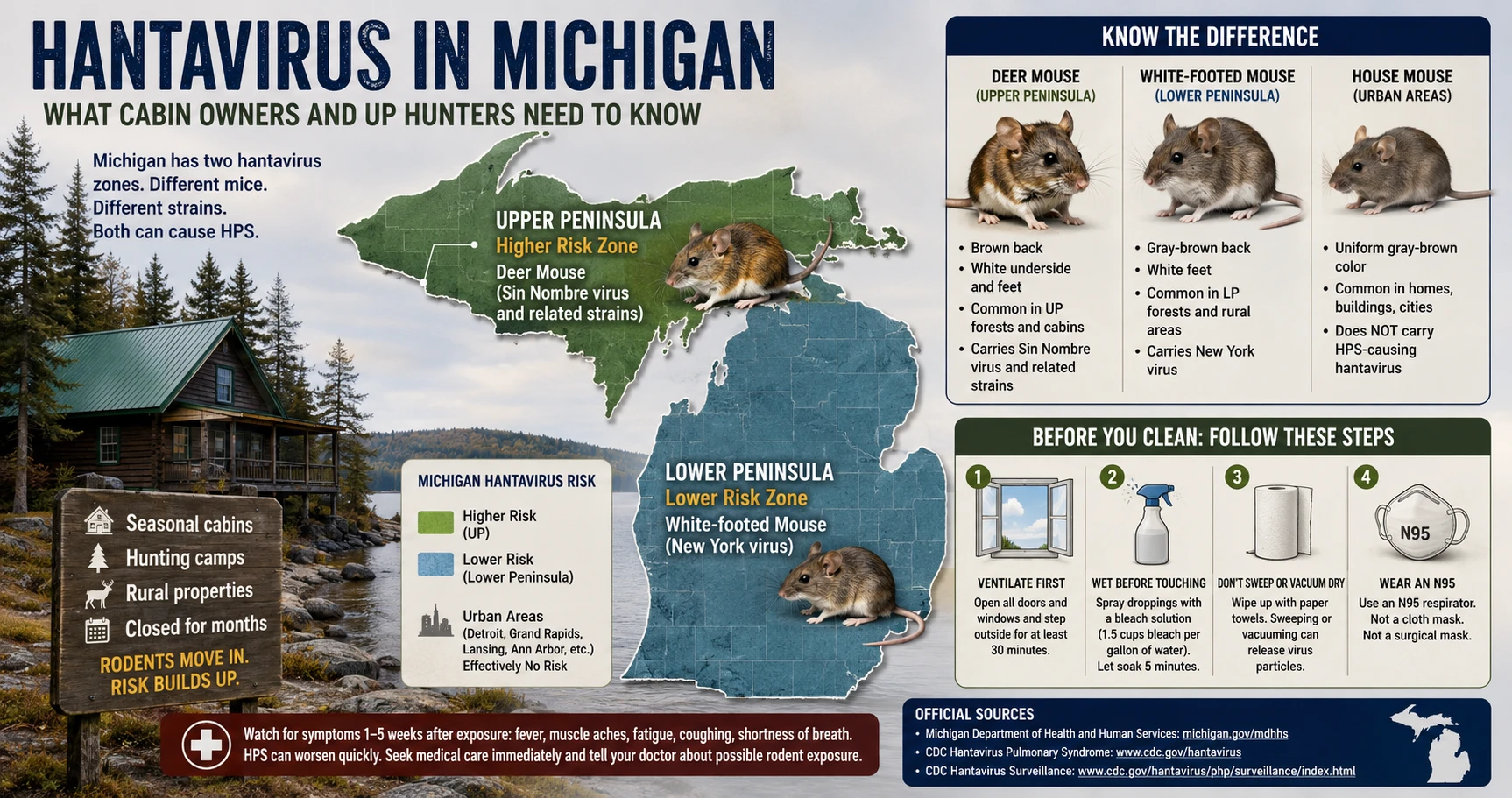
Michigan has a hunting and cabin culture deeply embedded in its outdoor identity — an estimated 1.5 million hunting licenses issued each year, and hundreds of thousands of seasonal properties across the state, many of them in the Upper Peninsula. That combination of remote structures and active rodent populations creates a recurring hantavirus exposure scenario that Michigan residents should understand.
Michigan's Two Hantavirus Zones
Michigan splits into two distinct ecological zones, and both have hantavirus-carrying rodents.
The Upper Peninsula is deer mouse (Peromyscus maniculatus) territory. The same species responsible for the majority of western US HPS cases — the primary carrier of Sin Nombre virus and related strains — is present throughout the UP's boreal forests, hardwood stands, and brushy areas. This makes the UP the higher-risk zone in the state. Dense wilderness, abundant hunting camps and cabins, and a small permanent human population mean that structures are often left closed for months and receive irregular inspection.
The Lower Peninsula is the range of the white-footed mouse (Peromyscus leucopus), which carries New York virus. This strain causes fewer documented cases nationally than Sin Nombre, but remains capable of causing HPS. White-footed mice thrive in the Lower Peninsula's mixed forests, agricultural edges, and wooded rural properties — particularly in the northern and central LP.
Neither the deer mouse nor the white-footed mouse is the common house mouse (Mus musculus) found in urban homes, restaurants, and suburban garages. House mice don't carry HPS-causing hantavirus. The species that matter for hantavirus look different — deer mice have a distinctive white underside and feet against a brown or grayish back, while house mice are uniformly gray-brown. But visual identification matters less than knowing which type of property and setting you're dealing with.
The Cabin and Camp Problem
Michigan's estimated 100,000+ seasonal properties — UP hunting camps, northern lake cabins, rural farm structures — are the primary setting for hantavirus exposure risk. Many of these structures sit empty from late October through early May, providing rodents with undisturbed overwintering habitat.
During those months, deer mice and white-footed mice nest inside walls, in stored mattresses and bedding, inside kitchen storage, and in insulation. By opening weekend — whether for fishing in May or deer season in November — months of accumulated droppings, nesting material, and urine occupy the enclosed space.
Entering a closed cabin or camp and disturbing that material — sweeping, shaking out bedding, running a forced-air furnace without first inspecting the ductwork — is where HPS exposure occurs. The virus becomes airborne when dried rodent waste is disturbed in an enclosed space.
The precautions are not complicated, but they require doing them before cleanup starts:
- Ventilate first: Open all doors and windows and step outside for at least 30 minutes before spending time inside
- Don't sweep or vacuum dry droppings: That's how you inhale virus particles
- Wet before touching: Spray droppings with a bleach solution (1.5 cups bleach per gallon of water), let it soak for five minutes, then wipe up with paper towels
- Wear an N95 respirator: Not a cloth mask, not a surgical mask — N95 filters fine particles
Detroit, Grand Rapids, and Urban Michigan
Michigan's urban and suburban areas carry effectively zero hantavirus risk. Detroit, Grand Rapids, Lansing, Flint, and Ann Arbor are not environments where deer mice or white-footed mice establish populations. The rodents present in these cities are house mice and Norway rats — neither of which carry HPS.
Urban and suburban residents who also own rural cabins or hunt in the UP face exposure risk tied to that activity, not their home address.
Seasonal Pattern
The highest-risk periods in Michigan align with the seasonal calendar of the state's cabin and hunting culture:
Spring (April–June): When seasonal cabins are opened for the first time after winter closure. Rodents have had four to six months of undisturbed activity in enclosed spaces. This is consistently the highest-risk opening period nationally.
Fall (September–November): Hunting season brings people back into camps that may have been empty since spring. A second opening after summer dormancy creates a secondary exposure window.
After high-acorn and mast years: White-footed mouse populations boom following years of abundant forest seed production. Elevated rodent numbers the following year translate to higher virus reservoir pressure.
If You Find Rodent Evidence in a Michigan Camp or Cabin
If there are droppings, gnaw marks, or nesting material in a property you're opening:
- Do not enter and start cleaning immediately — ventilate the space first
- Check the HVAC system and ducting before running the furnace — rodents nest in ductwork, and forced air distributes contaminated particles throughout the space
- Be thorough: droppings in one area often mean activity throughout the structure
- When in doubt about the scale of contamination, contact a pest remediation professional trained in hantavirus protocols before attempting cleanup
If you develop fever, intense muscle aches, fatigue, or breathing difficulty within one to five weeks of a potential rodent exposure, seek medical care immediately and tell your doctor about the exposure. HPS moves quickly once respiratory symptoms begin — early hospital care significantly improves outcomes.
Official Sources
- Michigan Department of Health and Human Services: Hantavirus — state surveillance and prevention guidance
- CDC Hantavirus Pulmonary Syndrome — national disease information and prevention
Sources & References
- CDC — Centers for Disease Control and Prevention
Hantavirus: Prevention, Symptoms & Control
- cdc.gov — Index
https://www.cdc.gov/hantavirus/php/surveillance/index.html
- michigan.gov — Hantavirus
https://www.michigan.gov/mdhhs/keep-mi-healthy/diseases-and-illnesses/a-to-z/hantavirus
All health claims on this page are verified against the primary sources listed above. View our Editorial Policy
Frequently Asked Questions
Medical Disclaimer
The information on this page is for educational purposes only and is not medical advice. If you believe you may have been exposed to hantavirus or are experiencing symptoms, contact a qualified healthcare professional or local health authority immediately.